

Air Zimbabwe to resume Harare-London flights on Wednesdays, Fridays and Sundays as Cabinet says over 21,000 nationals repatriated from South Africa
Cabinet says Air Zimbabwe will resume Harare-London flights by the end of July 2026, using a leased Airbus A330-300 aircraft with 302 seats.
Cabinet also said about 21,291 Zimbabweans have been repatriated from South Africa through Government-assisted arrangements since 28 May, while an estimated 56,832 returned independently.
Other Cabinet Notes:
▪️ Cabinet says Zimbabwe expects a Strategic Grain Reserve surplus of between 550,945 and 964,945 metric tonnes following the 2025/26 agricultural season.
▪️ Government stocks at the Grain Marketing Board stood at 194,142 metric tonnes as of 1 July, with an additional 67,929.59 metric tonnes held in third-party storage.
▪️ A total of 260,444 metric tonnes of crops had been marketed by 1 July, a 76% increase from the same period in 2025.
▪️ Tobacco sales reached 346.2 million kg at an average price of US$2.50/kg, with volumes up 6% but average prices down 25% compared to last season.
▪️ Wheat planting exceeded target by 6%, with 133,048 hectares planted, while Irish potato production is expected to reach 243,850 metric tonnes.
▪️ The Gastronomy Tourism Strategy aims to preserve Zimbabwe's food heritage, strengthen tourism value chains, empower communities, and establish a National Tourism (Culinary Arts) Academy in Victoria Falls.
▪️ Cabinet says about 21,291 Zimbabweans have been repatriated from South Africa through Government assistance since 28 May, while an estimated 56,832 returned independently.
▪️ Government has deployed 50 ZUPCO buses, established a 24-hour command centre at Beitbridge and is providing transport, accommodation, healthcare and reintegration support for returnees.
▪️ Cabinet approved the inaugural National MSMEs and Cooperatives Indaba, to be held on 16–17 July, expected to attract more than 1,500 delegates.
▪️ Cabinet approved principles to amend the National Biotechnology Authority Act to expand coverage to emerging biotechnologies, align it with the Constitution and Education 5.0, and strengthen enforcement powers.
▪️ Cabinet noted the outcome of the SADC Extraordinary Summit on Madagascar, which reported relative peace and urged continued implementation of political reforms.
▪️ Government says Zimbabwe used the 50th Dar-es-Salaam International Trade Fair to advance trade and investment partnerships ahead of the Zimbabwe-Tanzania Joint Permanent Commission of Cooperation later this month.
▪️ Cabinet welcomed Zimbabwe's endorsement to host the 19th AfCFTA Council of Ministers Meeting in Victoria Falls in 2027 and the 2029 Intra-African Trade Fair.
▪️ Cabinet announced Air Zimbabwe will resume Harare–London flights by the end of July 2026 using a leased Airbus A330-300, initially operating three weekly flights on Wednesdays, Fridays and Sundays.
Mnangagwa Signs CAB3 Into Law, Presidential Term Extended To Seven Years
Zimbabwe’s presidential and parliamentary terms will increase from five to seven years after President Emmerson Mnangagwa signed the Constitution Amendment Bill No. 3 into law. The Act was published in the Government Gazette on Tuesday, 7 July, and is now in force.
The Constitutional Amendment Act introduces some of the most far-reaching changes to the 2013 Constitution since its adoption.
The Bill passed both Houses of Parliament, with the National Assembly approving the final amendments last week. Its gazetting followed the President’s assent, bringing the sweeping reforms into effect immediately.
Among the most significant changes, the President will no longer be elected by direct public vote. Instead, Parliament will elect the Head of State.
Section 95 and Section 143 of the Constitution now fix the term of office for the President, Vice-Presidents, Senators and Members of the National Assembly at seven years.
Section 158 has been amended so that general elections must be held 30 days before the expiry of the seven-year term.
The Act reshapes key institutions. The Senate will expand from 80 to 90 members, with the President empowered to appoint 10 additional senators “chosen for their professional skills and other competencies after consultation with the National Assembly”.
A new office of Judge President of the Supreme Court has been created, and the Supreme Court may now hear appeals involving important points of law if it grants leave to appeal.
Judicial appointments will also change. Public interviews for prospective judges have been scrapped. The Chief Justice, Deputy Chief Justice and all judges will now be appointed by the President “after consultation with the Judicial Service Commission”. In addition, the Attorney-General must now meet the qualifications of a Supreme Court judge.
Electoral administration is set to change significantly. The Zimbabwe Electoral Commission loses its powers over voter registration, which will move to the Registrar-General.
A new Delimitation Commission, appointed by the President and chaired by a Supreme Court judge or person qualified as such, will take over the delimitation of constituencies and wards. Its members must include experts in demography and cartography, a governance specialist, and a representative of the National Chiefs Council.
Other notable reforms include the repeal of Part 6 of Chapter 12, abolishing the National Peace and Reconciliation Commission.
The functions of the Defence Forces have been restated, with an emphasis on protecting Zimbabwe, its people, national security, interests, territorial integrity and the Constitution.
On presidential succession, the Act provides that if the President dies, resigns or is removed from office, a Vice-President will act as President until Parliament elects a replacement within 30 days.
Parliament’s first sitting after an election must occur within 14 days of the result being declared, with the Clerk of Parliament presiding until a Speaker or President of the Senate is elected.
The changes have already drawn intense debate. Supporters argue they will stabilise governance and streamline institutions. Critics warn they will reduce public participation in choosing the President and concentrate power in Parliament.
The Constitutional Amendment Act is now in force.
Air Zimbabwe To Resume Harare–London Flights By End Of July 2026 – Zhemu Soda
Air Zimbabwe will resume flights between Harare and London by the end of July 2026, a Cabinet minister has said.
Speaking at a post-Cabinet media briefing in Harare on Tuesday, 7 July, the Minister of Information, Publicity and Broadcasting Services, Zhemu Soda, said the national airline would operate the route using a leased Airbus A330-300 from Spain’s Plus Ultra.
The aircraft has a combined capacity of 302 seats, configured with 30 in business class and 272 in economy.
“The nation is advised that the Airline will resume operations by the end of July 2026 and will utilise a leased Airbus A330-300 aircraft from Plus Ultra in Spain with a combined 302 seats, having a configuration of 30 business class and 272 economy seats,” said Soda.
“The airline will initially operate three weekly frequencies between Harare and London on Wednesdays, Fridays and Sundays.”
Air Zimbabwe last operated flights to London in December 2011, when financial pressures, creditor action and regulatory challenges forced it to suspend its Boeing 767-200 operations.
Since then, several attempts to relaunch the route have failed, despite strong commercial potential driven by demand from Zimbabwe’s diaspora in the United Kingdom and export opportunities for horticultural products.
Dynamos Part Ways With Mangombe, Withdraws “Juju” And Match-Fixing Allegations
Dynamos Football Club has reached a mutual separation agreement with four coaches after all allegations against them were withdrawn and their suspensions lifted, the club confirmed in a joint statement on Tuesday, 7 July.
The agreement, signed with the Sports and Recreation National Workers Union of Zimbabwe, covers Genesis Mangombe, Newsome Mutema, Tonderai Marume and Britto Gwere. The union had been representing the quartet during discussions with the club.
According to the statement, all allegations levelled against the four — relating to match fixing, use of juju, and insubordination — “have been dropped and withdrawn”. Suspensions issued against them have also been “uplifted” with immediate effect.
“The parties engaged and agreed to mutually terminate their contractual relationship and draw up a Mutual Separation and Release Agreement,” the statement read.
The coaches are now free to join other clubs. “All coaches involved are hereby deemed cleared to take up new roles with any other club of their choice henceforth,” Dynamos said, adding that it “wishes them well in their future endeavours”.
Both Dynamos and the union said they had “mutually engaged each other in good faith for the advancement of football” and reaffirmed that “football must remain the winner”.
The statement weeks of uncertainty surrounding the four technical team members, who had been sidelined pending internal processes. The mutual separation takes immediate effect.
Four Zimbabweans Among 198 “Zama Zamas” Arrested In Gauteng, SA
Four Zimbabwean nationals were among 198 suspected illegal miners who were arrested by South African Police during a major operation at the disused Losberg Kloof mine in Westonaria, Gauteng.
The vast majority of the suspects were found to be foreign nationals without documentation, Gauteng’s deputy police commissioner has said.
Major General Fred Kekana gave a breakdown of the arrests during a media briefing at the scene on Tuesday, 7 July 2026, where smoke was still visible in the background following the operation targeting zama zamas.
“We managed to arrest over 198 people. All of them for illegal mining,” Kekana told reporters.
Of those arrested, more than 107 are Lesotho nationals, four are Zimbabweans, over 56 are Mozambicans, and over 21 are South African nationals.
Four of the South African suspects face additional charges. One was found in possession of more than 120 rounds of AK-47 ammunition. The same four will also be charged with harbouring illegal immigrants.
Kekana said over 170 of those arrested would be charged for being in the country illegally. “All of those foreign nationals don’t have passports or any legal document to be in the country,” he said.
The arrests form part of ongoing police and military operations to combat illegal mining in Gauteng, which authorities say is linked to violent crime, weapons trafficking and underground fatalities.
The suspects are expected to appear in the Westonaria Magistrate’s Court once processing is complete.
Six Zimbabweans Die Fighting For Russia In Ukraine
At least six Zimbabwean nationals have been confirmed killed while serving in the Russian Armed Forces in Ukraine, according to a newly published database by the Ukrainian “I Want to Live” project and Stop Russian Recruiters. Researchers, however, warn that the true number could be significantly higher.
The verified list, released on 25 June 2026, contains the personal details of 485 African nationals from 29 countries who died after signing military contracts with Russia. It forms part of a wider database documenting 2,984 Africans from 40 countries believed to have enlisted in the Russian military since the full-scale invasion of Ukraine.
The publication provides the first official confirmation of deaths for families whose relatives travelled to Russia, in many cases reportedly lured by promises of employment, high salaries, citizenship or other opportunities.
The Zimbabweans confirmed dead are Privilege Mahumutsha, born 2 December 1990; Mandlenkosi Nkube, born 8 June 1977; Christopher Nyati, born 26 December 1991; Glenny Sibanda, born 29 August 1998; Tobani Humalu, born 21 October 1985; and Brian-Bright Chiwize, born 3 November 1991.
Mahumutsha died on 1 November 2025, Nkube on 3 January 2026, Nyati on 31 January 2026, Sibanda on 17 January 2026, Humalu on 20 January 2026, and Chiwize on 2 June 2025.
Because the names were transliterated from Russian records into English, minor spelling variations may occur. For example, Mandlenkosi Nkube is likely Mandlenkosi Ncube, while Tobani Humalu is likely Thobani Khumalo.
The database also lists a seventh individual, Professor Sibanda, born 24 February 1992, who is recorded as a Ghanaian national despite bearing what appears to be a Zimbabwean name.
Researchers said this discrepancy raises questions about the accuracy of Russian military records and whether other Zimbabweans may have been recorded under different nationalities.
According to the report, African recruits are frequently assigned to the lowest military ranks and deployed in high-risk assault operations. Researchers further allege that the deaths of foreign recruits receive little public attention within Russia.
“When they are killed, their deaths cause no political pressure inside Russia. There is no public grief, no media coverage, no domestic accountability,” stated the report.
“Bodies are typically logged as missing rather than confirmed dead. In cases where remains are recovered, they are cremated or buried in Russia. Families are not notified. Repatriation is not arranged.”
More: CITE
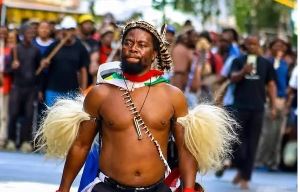
Mnangagwa Seeks Zulu, Xhosa Leaders’ Intervention To Protect Zimbabweans In SA
President Emmerson Mnangagwa has sought the intervention of Zulu and Xhosa kings in South Africa to help curb escalating xenophobic attacks against Zimbabweans and other foreign nationals.
Speaking at a media briefing at ZANU PF headquarters in Harare on Monday, 6 July, party spokesperson Christopher Mutsvangwa said President Mnangagwa was engaging Zulu and Xhosa leaders whose regions have become hotbeds of xenophobia.
“A couple of weeks ago, the President was consulting with one of the young men in South Africa who has very good connections with the traditional rulers in Zululand and Xhosa,” said Mutsvangwa.
“This is where there is a groundswell of weaponised poverty being used against each other, to see where the traditional leadership in those regions can come in and help us deal with that situation unfolding on the ground.”
Mutsvangwa said ZANU-PF believes that dialogue and constructive engagement remain the most effective means of reducing anti-immigrant tensions in South Africa.
He stressed that the government respects South Africa’s sovereignty and will not interfere in its domestic affairs.
“South Africa is still an independent country with its own governance and national jurisdiction,” Mutsvangwa said.
“We do not want to seem intrusive in the internal politics of South Africa. We still believe the South African government has the capacity to deal with this situation.”
Mutsvangwa’s remarks come amid growing anti-immigrant protests in parts of South Africa that have targeted foreign nationals.
Tens of thousands of Zimbabweans have fled South Africa in recent weeks following threats of violence by anti-migrant vigilante groups such as Operation Dudula and March and March.
Vendor Loses US$10,720 Claim Against City Of Harare Over Alleged Assault
A Harare vendor has lost his US$10,720 damages claim against the City of Harare after the High Court ruled he failed to prove that municipal police assaulted him or that the local authority was liable for his injuries.
Justice Maxwell Takuva dismissed Joseph Hondo’s claim in its entirety, with costs, finding his evidence inconsistent and insufficient to establish, on the balance of probabilities, that City of Harare municipal police officers were responsible for the alleged assault.
Hondo had sued the City for US$10,720 in damages for pain and suffering, humiliation, medical expenses and loss of income stemming from an alleged assault on 3 October 2018.
He claimed that, while selling goods near Karigamombe Centre, four municipal police officers attacked him during a vendor operation.
According to court papers, three officers restrained him while another beat him with a baton before shocking him with a taser-like device.
He further alleged he was bundled into a municipal truck and assaulted with fists, boots and batons, sustaining injuries to his head, shoulder and face, as well as psychological trauma and depression. He said he was unable to work for two months.
The City of Harare denied liability, arguing that no municipal officers were deployed to the area that day and disputing that any of its employees assaulted Hondo.
In dismissing the claim, Justice Takuva found that Hondo’s account changed significantly during proceedings.
Justice Takuva noted that shortly after the alleged assault, Hondo had told his doctor that he had been attacked by both uniformed riot police and plain-clothed municipal police, a version later confirmed during cross-examination.
“The change of plaintiff’s versions of what happened tilts the balance of probabilities in favour of the defendant. The probabilities weigh heavily against the plaintiff,” he said.
The judge attached weight to the fact that Hondo was taken to Harare Central Police Station afterwards, saying this was “consistent with him having been arrested by members of the ZRP”.
While Hondo claimed to know two of the municipal officers by the nicknames “Bhuru” and “Magaya”, the judge said he did not report them to police or provide their full identities for inclusion in the proceedings.
“Plaintiff failed to establish that he was assaulted by defendant’s employees. Therefore, plaintiff failed to prove that the defendant was vicariously liable for the assault,” the judge ruled.
The court also dismissed Hondo’s US$5,000 claim for humiliation, saying there was no evidence that the alleged assault was intended to degrade or embarrass him.
His claim for medical expenses also failed after the court found that he had produced no receipts to prove payment.
“The claim is dead and buried. The claim cannot succeed, it has collapsed,” the judge said after noting evidence from Hondo’s own doctor that he had received treatment free of charge.
Justice Takuva found that Hondo failed to establish the City of Harare’s legal liability for the alleged assault and dismissed the claim with costs.
The case stemmed from an incident in October 2018 amid political tensions in Harare, when security forces were deployed around Harvest House and municipal authorities carried out operations against informal vendors in parts of the CBD.
More: NewZimbabwe.com
Join our WhatsApp Channel
Be part of a growing community that relies on Dagmedia News for fast, accurate, and credible updates from across Zimbabwe and beyond.
We also offer: Graphic Design, Photography, Web Design, Videography, Concept Development, Idea Generation & Incubation, and Advertising Services.
©️ www.dagmedia.co.zw 2026
Click here to subscribe: Follow us on WhatsApp
















Comments (0)
Join the conversation
Sign in with Google to comment and like articles
No comments yet. Be the first to share your thoughts!