

Zimbabwe's election to the United Nations Security Council has been celebrated across the continent as a diplomatic triumph that extends far beyond the country's borders. While the announcement has generated considerable excitement among policymakers and diplomats, its true significance lies in what it represents for Africa's enduring quest for greater influence within the institutions that shape global affairs.
The election comes at a time when the international community is grappling with multiple crises, ranging from armed conflicts and terrorism to climate change, food insecurity and economic instability. Against this backdrop, Zimbabwe's arrival at one of the world's most influential decision-making bodies is viewed as an opportunity not only for the nation to contribute to international peace and security but also for Africa to amplify its collective voice in global governance. Follow us on WhatsApp
To understand the significance of Zimbabwe's election, one must first appreciate the origins and purpose of the United Nations Security Council itself. The United Nations Security Council was established in 1945 following the devastation of the Second World War. It was created as the principal organ responsible for maintaining international peace and security. The horrors witnessed during the war convinced world leaders that a mechanism was unavoidably necessary for the world to prevent future conflicts and foster cooperation among nations.
The Council was designed with fifteen members, five of whom hold permanent seats and possess veto powers. These permanent members—the United States, Russia, China, Britain and France—reflect the balance of power that existed at the end of the Second World War. The remaining ten seats are occupied by non-permanent members elected for fixed terms by the United Nations General Assembly.
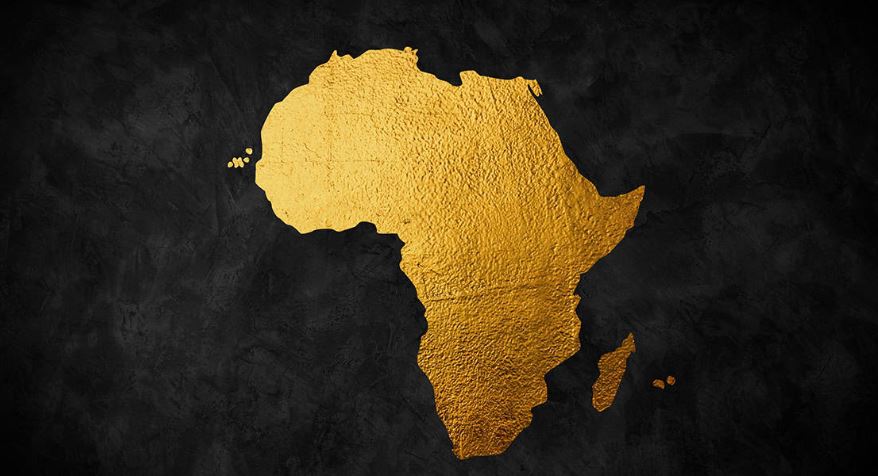
In the decades since its formation, questions have continually emerged regarding the fairness and representativeness of the United Nations Security Council. Africa, which today consists of 54 sovereign nations and forms the largest regional grouping within the United Nations, remains without permanent representation on the Security Council. This reality has long been cited as evidence that the structure of global governance has not kept pace with changing geopolitical realities.
For many African countries, including Zimbabwe, the issue is not merely about occupying a seat around the Council table. It is about ensuring that the experiences, priorities and concerns of developing nations are adequately reflected in decisions that often have profound consequences for millions of people across the continent. The election of Zimbabwe therefore carries symbolic and practical significance. It demonstrates that African countries continue to secure opportunities to participate in shaping international discourse even as they push for broader reforms of the global governance system.
Zimbabwe's presence on the Security Council also represents recognition of the country's diplomatic engagement in regional and international affairs. Throughout its history, Zimbabwe has played an active role in continental initiatives aimed at promoting peace, stability and economic cooperation. From supporting liberation movements during the struggle against colonialism to participating in regional mechanisms designed to address security challenges, the country has consistently sought to position itself as a voice for African interests.
The responsibilities awaiting Zimbabwe on the Security Council are substantial. Membership involves participating in deliberations on some of the world's most pressing issues, including conflict resolution, peacekeeping operations, sanctions regimes and responses to emerging security threats. Decisions made within the Council frequently influence the course of international relations and can affect the lives of people far beyond the borders of the countries represented there.
For Zimbabwe, the challenge will be to navigate complex geopolitical dynamics while remaining attentive to the concerns of both its citizens and the wider African community. This task requires diplomacy, strategic thinking and an ability to build consensus among nations whose interests often diverge sharply. It also presents an opportunity for the country to advocate for issues that disproportionately affect developing nations, including poverty, debt burdens, climate justice, food security and equitable access to resources.
Yet perhaps the most compelling aspect of Zimbabwe's election lies in its implications for Africa as a whole. Across the continent, leaders have repeatedly argued that international institutions should better reflect contemporary realities rather than the power structures that emerged in the aftermath of the Second World War. The African Union's Ezulwini Consensus, adopted in 2005, remains a cornerstone of these efforts, calling for Africa to be granted permanent representation on the Security Council as part of broader reforms aimed at making the institution more democratic and inclusive.
Zimbabwe's tenure on the Council offers another platform through which these aspirations can be advanced. While the country will serve as a non-permanent member, its presence provides an avenue for raising issues that resonate across the continent and for strengthening Africa's collective bargaining position within international forums. It is a chance to demonstrate that African nations are not merely subjects of global decisions but active contributors to their formulation.
The election also carries historical resonance. For a continent whose political and economic trajectories were shaped by centuries of colonial domination and exclusion from major centres of global power, every opportunity to participate meaningfully in international governance represents a step toward greater self-determination. Zimbabwe's seat on the Security Council can therefore be viewed as part of a broader story of Africa's emergence as an increasingly influential actor in world affairs.
As celebrations continue, expectations will inevitably rise. Zimbabwe's performance during its tenure will be closely observed not only by its citizens but also by fellow African nations that view the country's election as a collective achievement. The challenge will be to transform diplomatic success into tangible contributions that advance peace, security and development both within Africa and beyond.
In an era marked by uncertainty and shifting global alliances, Zimbabwe's election to the United Nations Security Council serves as a reminder that the international landscape is evolving. More importantly, it underscores Africa's determination to secure a stronger voice in shaping that future. For Zimbabwe, the seat represents a moment of national pride. For Africa, it symbolizes another step in the long journey toward a more equitable and representative international order—one in which the continent's perspectives are heard, respected and reflected in the decisions that affect the world.





















Comments (0)
Join the conversation
Sign in with Google to comment and like articles
No comments yet. Be the first to share your thoughts!