

There is a cruel irony etched into Zimbabwe's tar.
Only weeks ago, the Harare–Nyamapanda Highway became a place of mourning after a BRD Luxury Coach carrying Malawian nationals crashed near Suswe Shops, claiming numerous lives and leaving many others seriously injured. The passengers had travelled thousands of kilometres from South Africa with dreams of reuniting with families, investing their hard-earned savings and rebuilding lives back home. Instead, many never completed the journey. Their hopes were buried beneath twisted metal on Zimbabwean soil, and Zimbabweans mourned alongside their Malawian brothers and sisters.
Today, the same highway lives again.
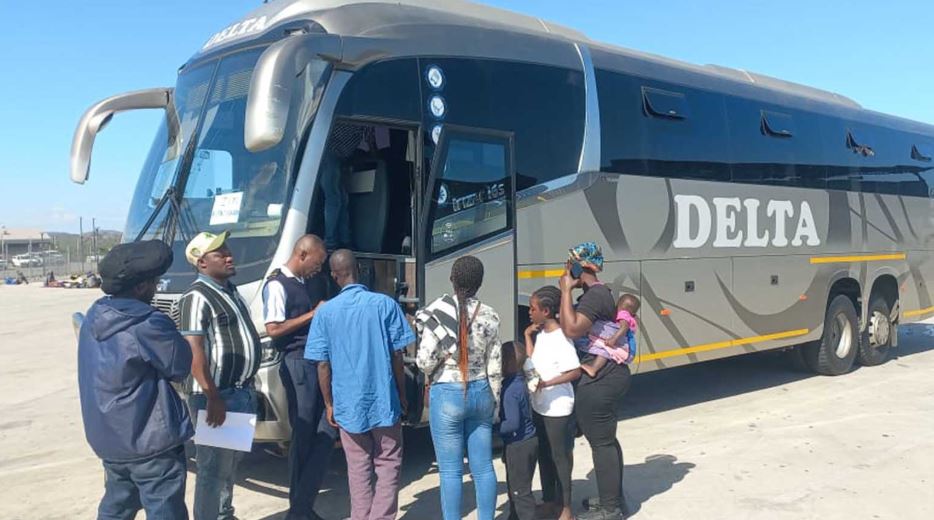
This time, however, the buses are not carrying holidaymakers or migrant workers returning home after years of toil. They are carrying frightened families fleeing a fresh wave of xenophobic violence in South Africa. Coach after coach snakes through Zimbabwe towards Malawi, loaded with people forced to abandon businesses, homes and livelihoods built over decades.
The road that recently witnessed death through a tragic accident has now become the escape route from another tragedy—one born not of mechanical failure or human error, but of hatred.
Veteran cross-border bus driver Tobias Phiri has driven the Johannesburg-Lilongwe route for more than a decade.
"I drove past Suswe after the accident. It is a sight I will never forget," he says. "Today I am carrying people who escaped another kind of disaster. The road is the same, but this time the injuries cannot be seen. This one kills the spirit."
His coach is packed with mothers holding children born in Soweto who barely speak Chichewa, young entrepreneurs silently watching cellphone videos of their burnt businesses, and elderly passengers wondering how they will begin life again after losing everything.
One elderly woman quietly summed up the suffering.
"We ran from poverty looking for opportunities. Today we are running from our own African brothers."
Those words expose the deepest wound facing Africa today.
This is no longer simply a migration story. It is a painful reminder that Pan-Africanism remains unfinished.
When Ghana's first President, Kwame Nkrumah, declared that Africa's freedom would only be complete when the continent stood united, he imagined borders becoming bridges rather than barriers. When Tanzania's Julius Nyerere spoke of African brotherhood, he envisioned a continent where a Malawian could live in South Africa, a Zimbabwean could work in Zambia and a Kenyan could prosper in Botswana without fear of persecution simply because of nationality.
Yet decades after independence, Africans continue to hunt fellow Africans while the ideals of unity are celebrated only in conference halls.
Economic Freedom Fighters leader Julius Malema has repeatedly condemned xenophobia, arguing that hatred directed at fellow Africans reflects a deeper mental imprisonment inherited from colonialism.
"A black person who hates another black person remains mentally colonised," he has repeatedly argued while urging Africans to unite against poverty rather than against one another.
Renowned Kenyan scholar Professor PLO Lumumba has been equally uncompromising.
He argues that Africa's greatest challenge is not the borders created during the Berlin Conference but the willingness of Africans to defend those borders with hatred against fellow Africans.
"How can Africa rise when Africans burn fellow Africans simply because they come from another country?" Lumumba has asked during several public lectures across the continent. "That is not freedom. That is the failure to decolonise the African mind."
Their observations expose the tragedy unfolding today.
Xenophobia is more than violence against foreigners. It is self-hatred wearing the colours of nationalism. It convinces poor communities that their enemies are fellow Africans searching for work rather than the systems that continue to produce unemployment, inequality and poverty.
Colonialism drew lines across maps, separating peoples who had traded, married and shared cultures for centuries. The Chewa were divided. The Ngoni were divided. The Shona, Venda, Tswana and many other communities found themselves citizens of different states overnight. Independence removed colonial administrations, but many Africans never removed the colonial mindset that taught them to distrust one another.
The buses travelling through Zimbabwe today therefore carry more than displaced families. They carry the unfinished business of African liberation.
Yet amid the darkness, there are still signs that the spirit of Ubuntu survives.
At border crossings and roadside service centres, some Zimbabweans have shared food, water and shelter with exhausted travellers. Transport operators have assisted stranded families while ordinary citizens have donated whatever little they could to ease the burden of those returning home with nothing.
Such acts may appear small, but they embody Pan-Africanism far more profoundly than speeches delivered in grand auditoriums.
True Pan-Africanism is not measured by resolutions adopted at African Union summits. It is measured by the willingness of an ordinary Zimbabwean to comfort a grieving Malawian, by a South African refusing to participate in violence against foreigners, and by Africans recognising that their destinies remain intertwined regardless of passports.
As Julius Malema has often challenged audiences, when Africans fight Africans, who truly benefits? The continent's minerals continue leaving its shores. Foreign corporations continue profiting from African resources. The structural causes of poverty remain untouched while the poor are encouraged to blame the poor.
The Harare–Nyamapanda Highway has now become a witness to two painful chapters in Malawi's recent history.
Near Suswe Shops, it claimed lives through a devastating road accident.
Today, it carries survivors fleeing xenophobic violence back to an uncertain future.
One tragedy was caused by the forces of fate. The other is entirely man-made.
Until Africa defeats the politics of division, rejects xenophobia and embraces the Pan-African dream championed by Nkrumah, Nyerere, Lumumba and many others, these buses will continue to travel the continent's highways carrying more than passengers. They will carry broken dreams, shattered families and painful reminders that Africa's greatest enemy is not always beyond its borders,it is the failure of Africans to recognise themselves in one another.
A continent that turns against its own children cannot fully realise the promise of its independence. Until brother sees brother before he sees nationality, the highways of Africa will continue to bear witness not only to journeys home, but also to the long and painful journey towards genuine African unity














Comments (0)
Join the conversation
Sign in with Google to comment and like articles
No comments yet. Be the first to share your thoughts!