

There are footballers who win matches and there are footballers who win trophies. Then there are the rare few whose presence reshapes the destiny of a nation. For nearly two decades, Lionel Messi has been all three.
For Argentina, the story has never simply been about goals, assists or silverware. It has been about belief. It has been about hope. It has been about a boy from Rosario carrying the dreams of more than 45 million Argentines, and millions more across the globe, every time he pulls on the famous sky-blue and white shirt. He has become more than a captain. He has become the heartbeat of a football nation and the face of an era many believe will never be repeated.
As the FIFA World Cup 2026 unfolds across the United States, Canada and Mexico, Argentina are living through a remarkable moment in football history. They are pursuing another world title with the greatest player of his generation still dictating the rhythm of their game. At the same time, they are quietly preparing for a future that cannot be postponed forever. The question is no longer whether Messi will eventually retire from international football. The real question is what Argentina will become when the man who has illuminated the game for almost two decades finally steps aside.
Friday night’s dramatic 3-2 victory over Cape Verde after extra time may one day be remembered as a perfect illustration of Argentina’s present and its future. On paper, it appeared to be a routine assignment for the reigning world champions. Instead, it became a bruising examination of character against a fearless Cape Verde side determined to prove that football’s biggest stages belong to those with courage as well as reputation.
Representing a nation of barely half a million people, Cape Verde refused to be intimidated by Argentina’s pedigree. They pressed aggressively, defended bravely and matched the South Americans with remarkable determination. For long spells, the underdogs looked capable of producing one of the greatest shocks in World Cup history as they repeatedly clawed their way back into the contest.
Whenever anxiety threatened to grip the Argentine ranks, every eye inside the stadium instinctively searched for one familiar figure.
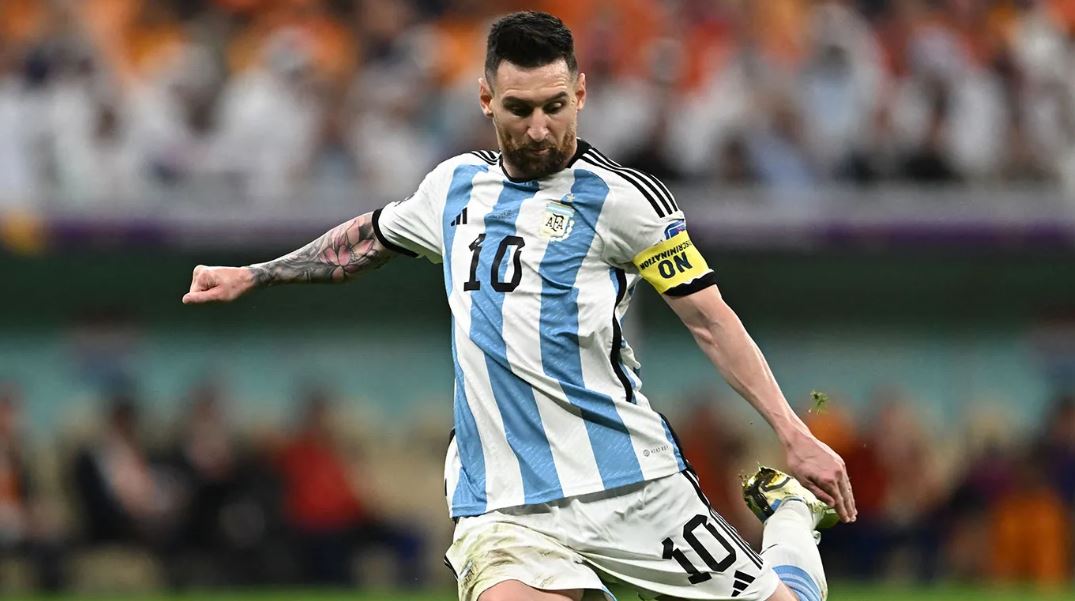
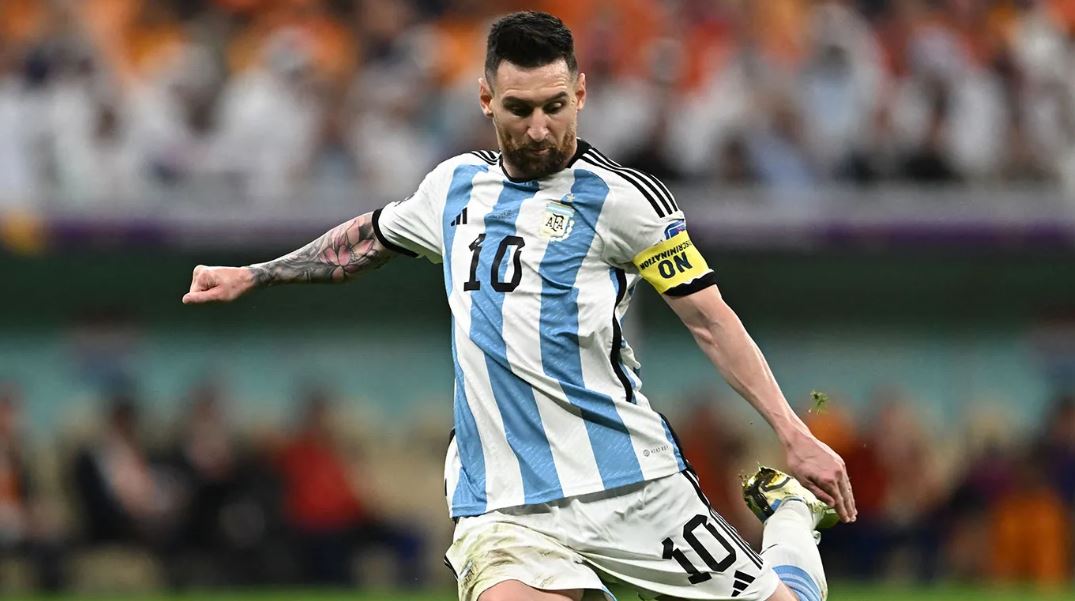
Messi responded in the manner only he can. His goal in the 29th minute carried all the hallmarks of a footballer who has spent a lifetime making the impossible appear effortless. He controlled the ball with composure, lifted his head and calmly dispatched his finish beyond the goalkeeper. There was no unnecessary flourish, no celebration of self. It was simply another reminder that even at 39, Lionel Messi continues to see football a fraction quicker than everyone else.
Statistics tell the story of Argentina’s dominance. They enjoyed about 65 percent possession and created more than twice as many attempts on goal as Cape Verde. Yet statistics alone cannot explain why Argentina survived one of the tournament’s toughest examinations. The numbers cannot reveal the authority with which Messi slowed the tempo when panic threatened to spread, or the intelligence with which he drifted into deeper positions to draw defenders away from teammates. They cannot measure the confidence that flows through an entire team simply because their captain continues to demand the ball when others might prefer to hide.
Every time Cape Verde restored parity, Messi’s response remained the same. He urged teammates forward, reorganised attacking patterns and pointed colleagues toward spaces that only he seemed to recognise. His influence extended well beyond the scoresheet because he was controlling not merely possession, but the emotions of an entire team.
One American newspaper declared afterwards that “Goliath had finally slain David.” Those who watched the contest knew the reality was more compelling. David had pushed Goliath to the edge of defeat, and it required the calm brilliance of Lionel Messi to ensure the giant remained standing.
Yet perhaps the most significant lesson from Miami was not Messi’s brilliance, but the growing maturity of the players around him. Julian Alvarez harried defenders with relentless determination and stretched Cape Verde’s back line throughout. Enzo Fernandez dictated tempo in midfield with a composure that belied his age, while Cristian Romero defended with the authority of a leader who relishes responsibility. When extra time demanded another hero, Lautaro Martinez stepped forward to score the decisive goal and send Argentina into the next round.
There was a time when Argentina appeared paralysed whenever Messi could not rescue them. That dependency has quietly disappeared under coach Lionel Scaloni. His greatest achievement has not only been winning the World Cup. It has been building a team inspired by Messi rather than imprisoned by him.
The triumph in Qatar four years ago offered the clearest evidence of that transformation. Angel Di Maria delivered a masterclass in the final, Emiliano Martinez became the nation’s hero in the penalty shootout, and Enzo Fernandez emerged as the tournament’s outstanding young player. Miami offered another reminder that Argentina have learned to share responsibility. Messi continues to ignite the fire, but his teammates now have the confidence to keep it burning.
That may ultimately prove to be the greatest compliment any footballer could receive. Messi has not simply elevated his own performances. He has elevated everyone around him.
Even so, replacing Lionel Messi remains the most daunting assignment in modern football. Some players can be substituted and others can be imitated. Messi belongs to neither category. You do not replace Diego Maradona any more than you replace Pele. Equally, you do not replace Lionel Messi. You prepare for a different era.
For almost 20 years, Messi has produced moments that defy conventional analysis. He has turned half-chances into unforgettable goals and found passes invisible to everyone else on the pitch. He has spent long periods walking before deciding entire tournaments with one breathtaking touch. Those qualities cannot be replicated because genius has never followed a coaching manual.
Without Messi, Argentina will lose the footballer capable of changing the course of a match in a heartbeat. They will lose the player who attracts defenders without moving, whose mere presence unsettles opponents before kickoff. They will lose the captain who has become the emotional compass of a generation.
Yet football has always been a story of renewal. Argentina survived after Mario Kempes and rebuilt after Diego Maradona. They will rebuild after Messi because the foundations have already been laid.
Cristian Romero and Lisandro Martinez have developed into one of international football’s most dependable defensive partnerships. Enzo Fernandez and Alexis Mac Allister provide creativity and balance in midfield, while Julian Alvarez combines relentless industry with clinical finishing. Alejandro Garnacho offers the fearless unpredictability of youth and a willingness to attack defenders without hesitation. Together they represent a generation blessed with pace, intelligence and tactical discipline. More importantly, they know how to win.
Ironically, Messi’s eventual departure may force Argentina to become less predictable. Opponents have spent years constructing tactical plans designed almost exclusively to stop one man — crowding central areas, doubling their marking and committing cynical fouls whenever Messi threatened to accelerate. Without that obvious focal point, Argentina may evolve into a team whose danger comes from every corner of the pitch rather than from one extraordinary individual.
That possibility should never diminish Messi’s importance. Quite the opposite. His greatest legacy may extend far beyond the goals he has scored or the trophies he has lifted. It may be found in the culture he leaves behind.
This Argentine side plays with humility, discipline and unity. Every player works for the collective cause and embraces responsibility. There are no oversized egos and no expectation that one individual must shoulder every burden. Those values reflect the quiet leadership that has defined Messi’s international career as much as his extraordinary ability.
For now, supporters should resist the temptation to hurry toward tomorrow. Lionel Messi remains, and he continues to produce moments that remind the world why many regard him as the greatest footballer to have played the game. Against Cape Verde, he once again settled nerves, inspired belief and guided Argentina through another searching examination that might easily have ended differently.
Next comes another challenge as Argentina prepare to face Egypt in the Round of 16. It will present fresh questions and fresh dangers, and perhaps another opportunity for Messi to demonstrate why his name has become synonymous with excellence.
Whenever his final international appearance arrives, Argentina will feel the weight of his absence. The famous No.10 shirt will appear heavier and the national anthem may sound different without the familiar figure leading his teammates onto the pitch. Yet if Lionel Scaloni’s men have learned anything from their captain, it is that greatness belongs not to individuals alone, but to nations prepared to fight together.
Lionel Messi remains the heart and soul of Argentina. He is the genius who transformed football into poetry and the captain who taught a generation that dreams can be realised through perseverance as much as talent. When he eventually walks away from international football, Argentina will lose the greatest player to wear their colours. The world, meanwhile, will bid farewell to one of the finest sportsmen it has ever witnessed.
His heartbeat may one day fade from the centre circle, but the spirit he awakened inside Argentina will continue to echo through every generation that follows.
Join our WhatsApp Channel
Be part of a growing community that relies on Dagmedia News for fast, accurate, and credible updates from across Zimbabwe and beyond.
We also offer: Graphic Design, Photography, Web Design, Videography, Concept Development, Idea Generation & Incubation, and Advertising Services.
©️ www.dagmedia.co.zw 2026
Click here to subscribe: Follow us on WhatsApp



















Comments (0)
Join the conversation
Sign in with Google to comment and like articles
No comments yet. Be the first to share your thoughts!