

There was a time when a knock at the door meant family had arrived, or a neighbour had come seeking help. Today, for thousands of foreign nationals living in parts of South Africa, that same knock has become a source of dread. It is the sound that makes curtains close, children fall silent, and families wonder whether they will still have a home by sunrise.
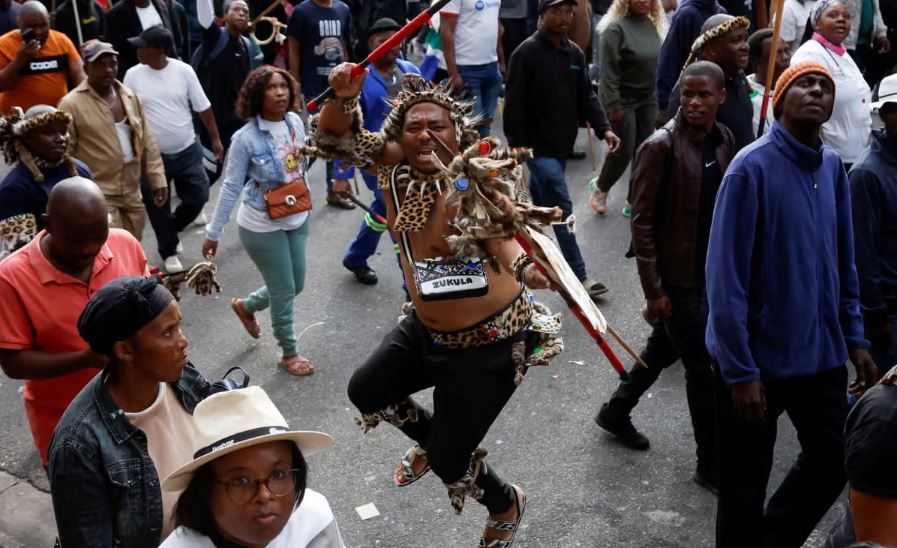
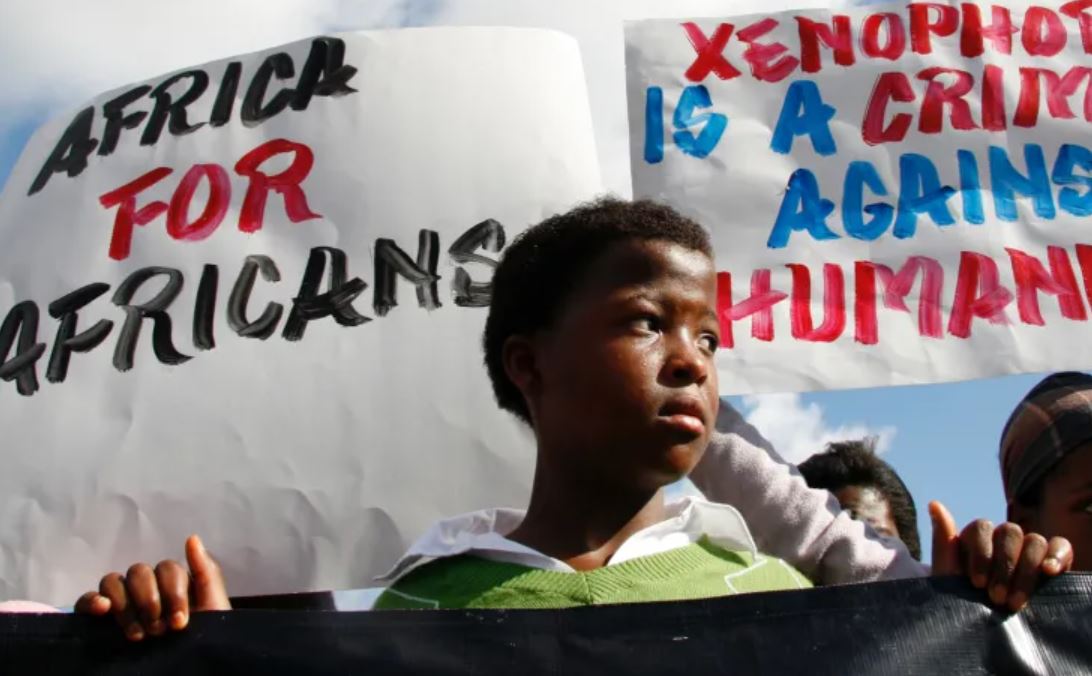
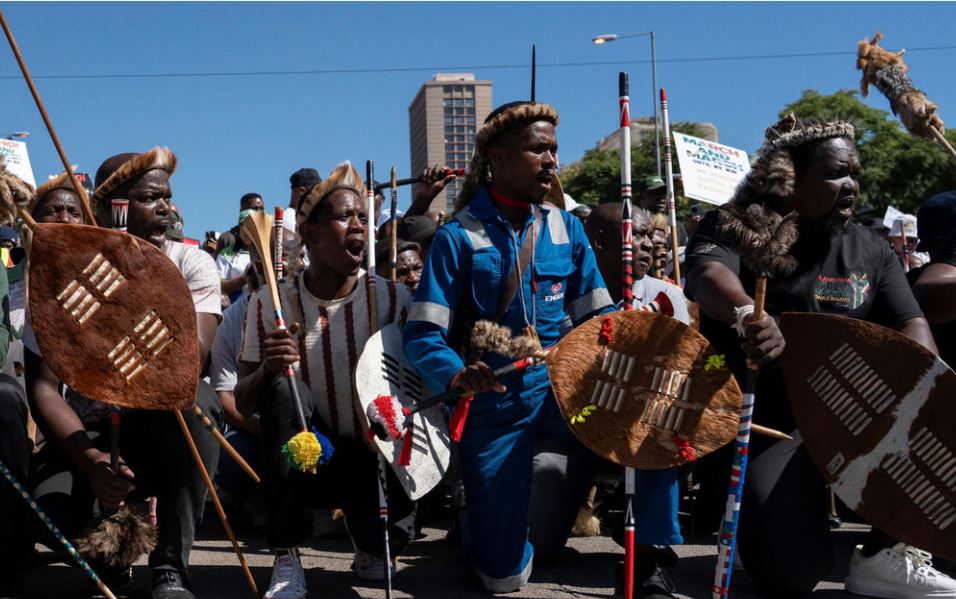
Across several communities, disturbing reports continue to emerge of self-styled xenophobic groups moving from street demonstrations to door-to-door campaigns targeting foreign nationals. Residents are allegedly ordered to produce identity documents by people with no legal authority to demand them. Some have reportedly been assaulted, threatened and robbed, while others have watched helplessly as businesses they spent years building were looted or destroyed.
The scenes have shocked many across the African continent. They have also raised uncomfortable questions that South Africa, and Africa as a whole, can no longer afford to ignore.
Who gave these groups the authority to decide who belongs in South Africa?
Who empowered ordinary citizens to become immigration officers, police investigators and judges at the same time?
When did neighbourhood patrols become courts of law?
South Africa is a constitutional democracy founded upon the rule of law. Its Constitution is celebrated around the world for protecting human dignity, equality and justice. Like every sovereign nation, South Africa has every right to regulate immigration, protect its borders and deport those who are unlawfully present through lawful processes.
That responsibility belongs to the State.
It belongs to immigration authorities, the police and the courts.
It does not belong to angry crowds.
If a foreign national has entered South Africa illegally, the law already provides procedures for dealing with that situation. If someone commits robbery, murder, fraud or drug trafficking, the criminal justice system exists to investigate and prosecute those offences regardless of nationality.
The law has never authorised citizens to move from house to house demanding passports and identity documents.
The law has never authorised communities to remove families from their homes because they speak with a different accent.
The law has never permitted anyone to loot another person’s shop because of where that person was born.
If such actions are allowed to become normal, then the issue is no longer immigration.
It becomes vigilantism.
It becomes lawlessness.
It becomes a direct challenge to constitutional governance.
Perhaps the greatest tragedy is that many of those now living in fear are not strangers who arrived yesterday. Some crossed into South Africa 20 or even 30 years ago seeking opportunities during difficult periods in their own countries. Others established businesses that now employ South Africans, support local suppliers and contribute to municipal revenues through taxes and licence fees.
Many arrived carrying little more than hope.
Today, some own supermarkets, transport companies, construction firms, restaurants and small manufacturing businesses. They built their wealth through sacrifice, perseverance and countless hours of hard work.
Now some are watching everything disappear in a single afternoon.
A shop that took 20 years to establish can be emptied within minutes by a violent mob.
A family home bought after decades of saving can suddenly become a place of fear.
Children born and raised in South Africa find themselves asking questions no child should ever have to ask:
Where do we belong?
What have we done wrong?
Why do they hate us?
These are questions that should trouble every African.
Supporters of campaigns against undocumented migration argue that illegal immigration places enormous pressure on public services, employment opportunities, housing and healthcare. Those concerns deserve serious discussion because every country has a responsibility to manage migration effectively and fairly.
Yet there is an equally important question:
Can frustration over immigration justify violence?
Can economic hardship justify looting?
Can unemployment justify beating another human being because they come from another African country?
History answers those questions with painful clarity.
Violence has never solved unemployment.
Destroying businesses has never created prosperity.
Driving away entrepreneurs has never strengthened an economy.
If anything, such actions deepen poverty because businesses close, workers lose jobs, investors lose confidence, and communities become trapped in cycles of fear.
South Africa itself understands better than most nations the dangers of allowing ordinary people to determine who deserves rights and who does not.
Its painful history under apartheid demonstrated the terrible consequences of discrimination enforced outside the principles of equality and justice.
That history inspired one of the world’s most admired Constitutions.
It also inspired generations of Africans to stand with South Africa during its darkest years.
Zimbabwe, Zambia, Tanzania, Mozambique, Angola and many other African countries welcomed South African freedom fighters when apartheid sought to silence them. Ordinary families shared food, shelter and security with men and women whose only crime was demanding equality in their homeland.
Africa stood with South Africa.
Today many Africans are asking whether South Africa still stands with Africa.
That question is not intended to condemn an entire nation, because millions of South Africans reject xenophobia and have publicly defended their foreign neighbours. Religious organisations, civil society groups and community leaders have repeatedly appealed for peace and restraint. Many South Africans have protected foreign-owned businesses during periods of unrest and have reminded the world that criminal acts committed by a minority do not represent the values of an entire country.
Those voices deserve recognition.
They represent the South Africa envisioned by Nelson Mandela, Oliver Tambo and Walter Sisulu, and countless others who believed freedom loses its meaning if it belongs only to some.
The silence of institutions, however, becomes equally important when unlawful actions continue in full public view.
If groups can walk from door to door identifying people for intimidation today, what prevents another group from targeting citizens tomorrow because of their ethnicity, language or political affiliation?
When the rule of law weakens, nobody remains permanently safe.
That is why the current situation demands more than political statements. It demands decisive action.
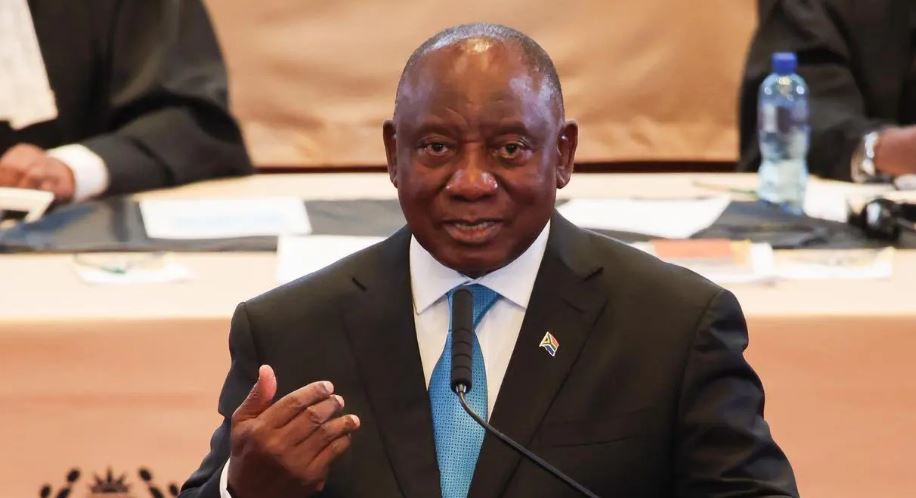
The South African Government faces the difficult responsibility of enforcing immigration laws firmly and fairly while ensuring that every person within its borders is protected from unlawful violence and intimidation. Police must remain the only authority empowered to investigate crime, and immigration officials must remain the only authority responsible for determining immigration status.
Anything less risks replacing constitutional order with mob justice.
Neighbouring governments also have responsibilities. They must continue creating opportunities that reduce forced migration and strengthen regional cooperation on employment, border management and security. Diplomatic engagement remains essential because migration is rarely caused by one country alone. It reflects wider economic realities across the region.
Regional bodies such as the Southern African Development Community and the African Union must also move beyond expressions of concern and actively facilitate lasting solutions. Pan-Africanism cannot survive as a slogan recited at summits while ordinary Africans fear crossing borders in search of honest work.
The African Continental Free Trade Area promises greater movement of goods, investment and skills across the continent. That vision cannot flourish if fear accompanies every journey and if success itself becomes a reason for persecution.
The future of Africa depends upon cooperation rather than suspicion.
It depends upon justice rather than vengeance.
It depends upon governments, rather than mobs, enforcing the law.
The knock at the door should never become a warning that someone’s nationality is about to determine whether they keep their home or lose everything they have worked for.
South Africa has every right to protect its borders.
It has every right to remove undocumented migrants through lawful processes.
It has every right to prosecute criminals regardless of where they come from.
What it cannot afford to surrender is the rule of law itself.
Because the moment private groups begin deciding who belongs and who must leave, who deserves protection and who deserves punishment, the question ceases to be about foreigners.
It becomes a question every South African should ask:
If the law no longer protects the stranger today, who will protect the citizen tomorrow?
Join our WhatsApp Channel
Be part of a growing community that relies on Dagmedia News for fast, accurate, and credible updates from across Zimbabwe and beyond.
We also offer: Graphic Design, Photography, Web Design, Videography, Concept Development, Idea Generation & Incubation, and Advertising Services.
©️ www.dagmedia.co.zw 2026
Click here to subscribe: Follow us on WhatsApp

















Comments (0)
Join the conversation
Sign in with Google to comment and like articles
No comments yet. Be the first to share your thoughts!