

Beneath the rocky hills of Mutoko lies a treasure that has become the heartbeat of the global green economy. Lithium has turned Zimbabwe into a destination for international investment. Like a magnet drawing iron filings, the mineral continues to attract global interest as nations race to secure the future of clean energy.
Yet one question refuses to disappear.
How can a nation blessed with the mineral that powers the world's batteries struggle to afford the batteries its own people need?
That question is growing louder with every truck that leaves Mutoko carrying tonnes of lithium destined for foreign markets.
Zimbabwe is among Africa's leading lithium producers. Operations at Arcadia, Bikita Minerals, Zulu Lithium and Kamativi have placed the country firmly on the global mining map. The industry continues to create opportunities for economic growth and industrial expansion.
The mineral beneath Zimbabwean soil has become the gold of the modern age. It is the heartbeat of electric vehicles. It is the lifeblood of renewable energy. It is the spark driving the Fourth and Fifth Industrial Revolutions.
Yet many Zimbabwean families still find lithium-ion batteries beyond their reach.
The irony is impossible to ignore.
A country that exports the future of energy should not remain in darkness.
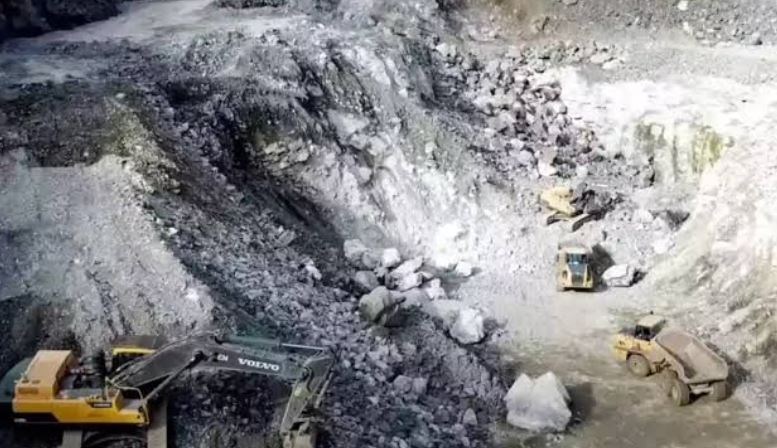
Every day the roads of Mutoko rumble beneath heavily loaded trucks. Like rivers flowing to the sea they carry away a resource that has become one of the world's most valuable strategic minerals.
Communities watch the endless procession with hope.
Hope that the wealth beneath their feet will one day transform their lives.
Hope that development will extend beyond the mine gate.
Hope that the mineral leaving their district will return as opportunity rather than expensive imported products.
The Government has repeatedly emphasised value addition and beneficiation as key pillars of Vision 2030.
Lithium presents perhaps the greatest opportunity to translate that vision into reality.
Zimbabwe has an opportunity to become more than a supplier of raw minerals.
It can become a manufacturer.
It can become an innovation hub.
It can become a regional leader in battery technology.
The country's young engineers have the potential.
Its universities have the knowledge.
Its mineral resources provide the foundation.
What remains is the determination to build industries that process Zimbabwean minerals for Zimbabweans before they serve the rest of the world.
Affordable batteries should not be viewed as a privilege.
They should become part of a broader national development strategy.
Reliable battery storage would strengthen hospitals.
Schools would continue learning during power outages.
Farmers would irrigate their crops with confidence.
Small businesses would operate without fear of prolonged electricity interruptions.
Like a tree whose roots feed every branch, the benefits of lithium should reach every Zimbabwean household.
Industrialisation begins with deliberate choices.
Countries that have transformed their economies did not rely solely on exporting raw materials.
They invested in processing.
They built factories.
They created industries.
They developed skills.
They retained value within their borders.
Zimbabwe has every reason to follow the same path.
Mining companies have made significant investments in the country.
Their contribution to economic growth is acknowledged.
As investment expands, communities naturally expect greater participation in the benefits generated by their natural resources.
This is not a call for confrontation.
It is a call for partnership.
It is not a demand for charity.
It is a call for shared prosperity.
The dream of every resource-rich nation is to convert mineral wealth into national wealth.
Lithium should become the bridge that carries Zimbabwe from resource extraction to industrial transformation.
Mutoko should not only be remembered as the place where lithium was discovered.
It should be remembered as the birthplace of Zimbabwe's battery manufacturing industry.
It should become a beacon of innovation.
It should become a furnace where minerals are transformed into finished products.
It should become a cradle of employment for generations to come.
The trucks leaving Mutoko each day carry more than lithium.
They carry the hopes of a nation.
They carry the aspirations of young graduates seeking meaningful employment.
They carry the expectations of communities yearning for lasting development.
Above all they carry an opportunity that comes once in a generation.
History will judge Zimbabwe not by the quantity of lithium exported but by the prosperity created from it.
The nation possesses the resource.
The nation possesses the vision.
The nation possesses the people.
Now is the time to ensure that the mineral powering the world also powers Zimbabwe's future





















Comments (0)
Join the conversation
Sign in with Google to comment and like articles
No comments yet. Be the first to share your thoughts!