

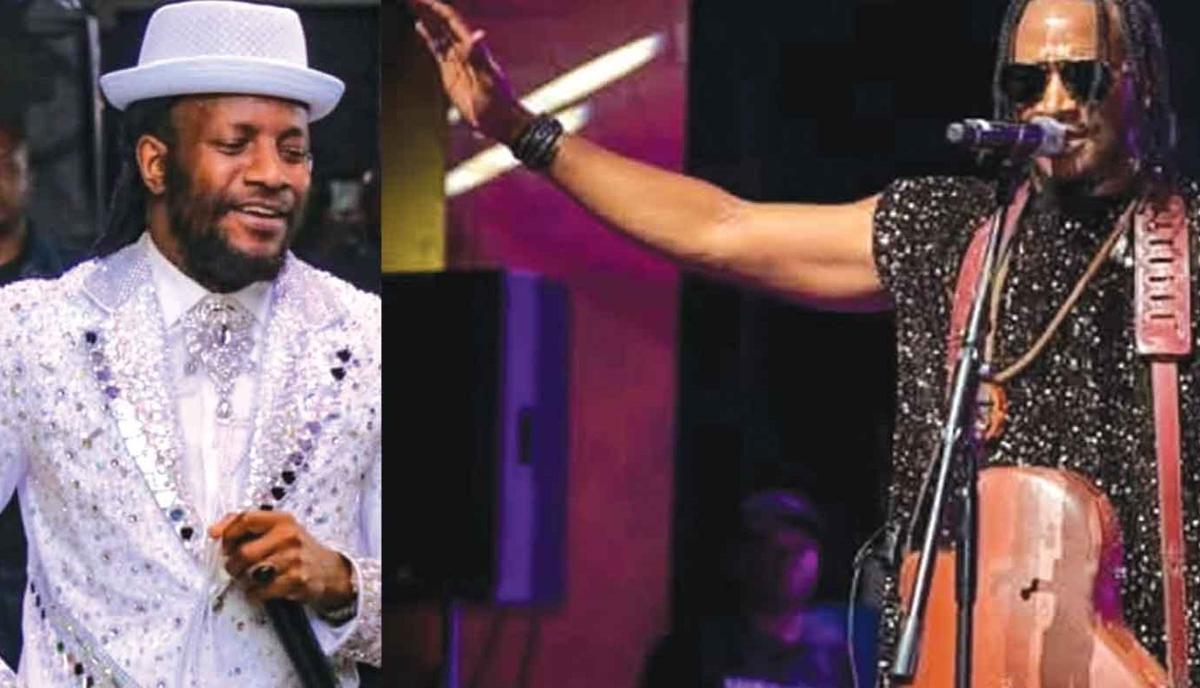
My name is Thomas “Mukanya” Mapfumo, the Lion of Zimbabwe. I felt I should address the people of Zimbabwe after so much protest and “noise” about the gift.
I have noticed that most Chimurenga Music fans are unhappy with my decision to accept the gift. Hundreds of thousands of comments and messages have been shared across social media and sent directly to my phone.
I have also seen the mocking cartoons that portray me as a hypocrite or a selfish and greedy man who accepts a doughnut to desert a starving family behind.
I am humbled and grateful for the registered concern, protests and thoughtfulness many have expressed regarding my name, reputation, and the upcoming gift.
I would like to clarify a few points.
First, I am, and will always remain, a human rights activist. Accepting a gift from a fan does not mean that I have abandoned my cause or betrayed my people or my music.
My beliefs remain unchanged, and my conscience is clear. I understand the poverty, suffering, and daily struggles faced by my people. I also understand the concerns and accusation labels hinting that I have “crossed the floor.”
In fact, I have not abandoned my principles, nor have I thrown anyone under the bus. Equally, accepting this gift should not be interpreted as validating or dismissing the grievances of ordinary Zimbabweans.
Zimbabwe has had a dozen celebrity artists emerge from the USA to perform and get paid by the same people who are inviting me to perform and take a gift. No one has complained against the dozen US artists jetting in for business.
While I am an activist, I am not an opposition politician. Much of the recent criticism on social media seems to imply that I have abandoned a political role that I was never elected or appointed to perform.
Becoming involved in social justice was a personal lifelong decision. I remain committed to advocating for human rights, freedom, equality, and social justice for as long as I live.
The responsibility of contesting for political power and pursuing government reform belongs to opposition political leaders, such as the late Morgan Tsvangirai, Nelson Chamisa, and other opposition figures.
It is their role to provide political leadership and seek a change of government where they believe it is necessary.
Although I fight for the ordinary people, my role is different. I am an activist and social influencer who supports causes that promote justice, freedom, and equality.
I am also not the first musician to accept such a gift, nor am I accepting it simply for the fear of missing out (FOMO) or following others on a populist bandwagon. I am humbly accepting it without conditions, let alone endorsing any political movement or cause.
I plan to donate most of the proceeds to a local charity. Many respected musicians—including Feli Nandi, Alick Macheso, Baba Manyeruke, Leonard Zhakata, the late Nicholas Zakaria and others—have accepted similar gifts over the months and years.
Religious leaders from various churches, including our baby blue blazer prophets, prophetesses, and apostles, have also accepted such gifts without attracting the same level of public outrage and censure.
I believe I deserve some audience, peace and space. I remain an activist, and my principles have not been compromised. I have not sold out my conscience or my values, and I intend to remain true to them for the rest of my life.
Finally, it is important not to confuse the role of a social justice activist with that of an opposition political leader. An opposition leader would be seeking to form a government and govern. He would command millions of subscribers as he leads them to elections.
An activist is a one-man band and speaks out against observed injustice wherever it occurs, but does not necessarily seek political office.
I therefore encourage those who are disappointed by the current political situation to direct their concerns and energy toward those whose mandate is to provide political leadership and accountability.
The public deserves clear answers and honest explanations from those entrusted with that responsibility. I do not have a political party, but I fight for the people daily.
As an activist, I do not have the Father Zimbabwe title or emblem. I do not have the mandate to liberate Zimbabwe, but I have the drive to expose injustice. I only use my music stage to express disgruntlement, the call for freedom and social justice.
The recent bad language directed against me due to the gift makes me feel like I intentionally threw the key to the liberation struggle onto a crocodile-infested Zambezi River. I remain an all-weather activist, and I can do so much as I identify with the masses.
Thank you for your concern, your engagement, and your continued support. I remain a die-hard activist until the day I leave Mother Earth.
Security Guard Jailed For 3 Years After Stealing US$160,000 From Company Safe
A security guard who stole US$160,000 from his employer’s safe and used the money to buy a house, vehicles and build a rural homestead has been sentenced to an effective three years in prison.
Ishmael Stanley Chakombera, 38, of Mudzi, was convicted of theft and unlawful entry by the Harare Magistrates’ Court.
The court heard that in March 2025, while employed as a security guard at Valiage Enterprises (Pvt) Ltd, Chakombera hatched a plan to steal the company’s office and safe keys.
He used the keys to gain access to the safe and stole US$160,000 in cash. After committing the offence, he resigned from his employment without notice.
The theft only came to light a month later. In April 2025, a senior official at Valiage Enterprises opened the safe and discovered the money was missing. Upon inspection, the company established that the safe had not been physically damaged or tampered with in any way, prompting them to file a police report.
Police investigations established that Chakombera had used the proceeds to fund a lavish spending spree. He had purchased a house in Budiriro 4 in Harare and built a homestead in Mudzi, where he had also drilled a borehole and installed a solar power system.
During questioning, Chakombera admitted to stealing the money from the company safe. Police established that he used part of the proceeds to purchase the house, a UD Truck P92, a Nissan AD Van, and a tricycle, among other properties.
Property worth US$125,000, as well as the office and safe keys, were recovered.
The court sentenced Chakombera to ten years’ imprisonment. Three years were suspended for five years on condition that he does not commit a similar offence during that period. A further four years were suspended on condition that he pays the victim US$35,000 in restitution by 30 August 2026, leaving him with an effective sentence of three years’ imprisonment.
Zimbabwe Medicines Regulator Warns Content Creators Against Advertising Unregistered Medicines
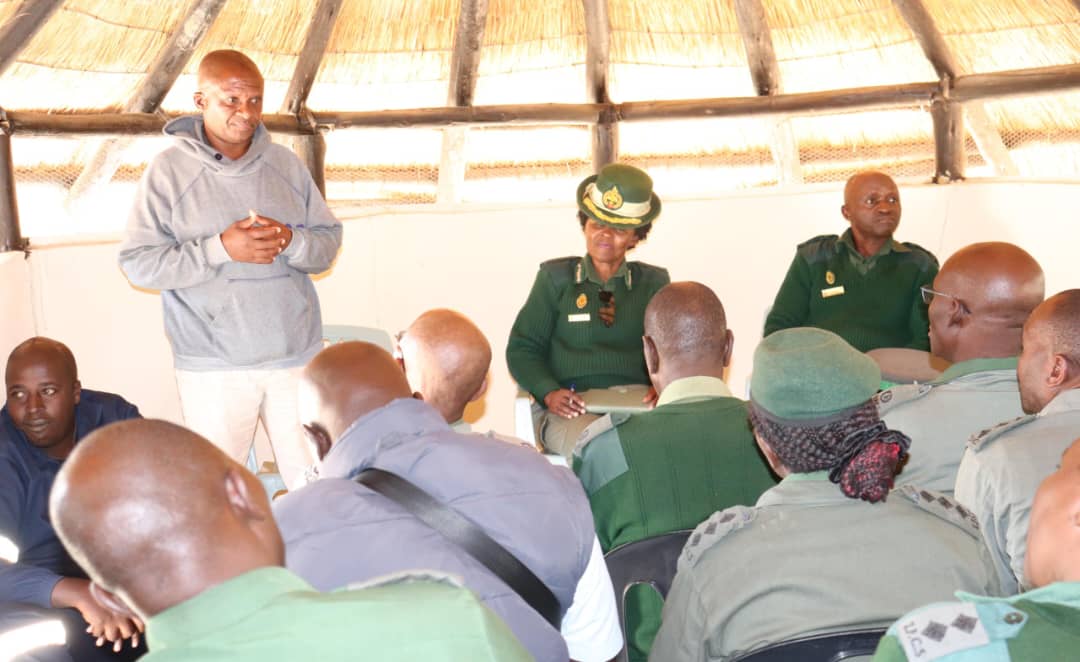
The Medicines Control Authority of Zimbabwe (MCAZ) has engaged content creators and social media influencers amid growing concerns about the promotion of unregistered medicines and misleading medical products on digital platforms, in breach of the Medicines and Allied Substances Control Act.
Speaking during a meeting with content creators in Harare on Wednesday, MCAZ public relations officer Davidson Kaiyo said the authority had deliberately chosen engagement over punitive action to address gaps in knowledge about medicine advertising regulations.
“We noted the proliferation of advertising of medicines by our content creators and realised that, while some of those adverts were contrary to the law, many of the creators were simply unaware of the legal requirements,” said Kaiyo.
“We felt that instead of simply taking enforcement action, it was important to engage them so that they understand the procedures that must be followed before advertising medicines.
“We want to create synergy because content creators are now carrying the voice of the people and are setting the pace in storytelling and content creation.”
Kaiyo said the rapid growth of digital platforms had transformed the way Zimbabweans access health information, making content creators influential voices in shaping public perceptions of medicines and healthcare.
“A single unregulated post promoting a substandard or falsified medicine can reach more Zimbabweans in an hour than a public health warning reaches in a week,” he said.
“That is the responsibility this room carries. MCAZ is not here to police creativity or restrict freedom of expression.
“We are here to build a partnership because compliance and creativity are not opposites. This is about protecting lives.”
Brand influencer Lorraine Guyo admitted that many influencers had been unknowingly breaking the law.
She however appealed to the MCAZ to streamline its approval processes.
“They told us that approval can take up to 60 days, which is quite long for us because we are in business and need to work promptly,” she said.
“It’s also important for MCAZ to increase awareness because not all content creators attended this meeting.”- The Herald
Children Having Sex At 10, Report Finds
Eight children aged between 10 and 14 were among 4,140 adolescents and young people who sought family planning services for the first time in Midlands Province during the first quarter of 2026, the Zimbabwe National Family Planning Council has revealed.
This has raised concern about the young age at which children are having their first sexual experience.
ZNFPC data for Midlands shows young adults aged 20 to 24 accounted for the highest number of first-time family planning clients at 2,537, followed by 1,595 aged between 15 and 19.
Health experts say the figures point to growing sexual activity among adolescents, driven by exposure to sexually explicit content online, child sexual abuse, inadequate parental supervision, substance abuse, school dropouts and limited access to comprehensive sexuality education.
They warn that many adolescents only seek contraception after becoming sexually active, increasing their risk of unintended pregnancies and sexually transmitted infections.
ZNFPC Midlands provincial manager Karen Dzuke called for comprehensive sexuality education and stronger child protection systems to improve adolescents’ access to accurate reproductive health information and help reduce unintended pregnancies, HIV infections and sexual exploitation.
The report also shows that Gweru distributed 10,525 female condoms compared with 207,183 male condoms, while Kwekwe recorded 6,340 female condoms against 248,235 male condoms, the highest male condom distribution in the province.
Across Midlands, more than 1.5 million male condoms were distributed during the quarter, compared with about 22,000 female condoms.
Other districts reported similarly low uptake of female condoms.
Gokwe North distributed 3,331 female condoms against 177,113 male condoms, Gokwe South 805 against 221,052, Mberengwa 427 against 139,043, Shurugwi 204 against 204,944, Zvishavane 190 against 217,597, while Chirumhanzu recorded the lowest distribution at 154 female condoms against 99,858 male condoms.
Dzuke attributed the low uptake to limited awareness, cultural beliefs, misconceptions about the female condom, partner resistance and inadequate counselling and demonstrations by healthcare workers.
She said improving uptake would require sustained community education, stronger counselling by health workers, greater male involvement in reproductive health programmes, reliable supplies at health facilities and expanded youth-friendly sexual and reproductive health services.
The Law Should Target Drug Dealers, Not Users, Says Magistrate
A magistrate has questioned whether the country’s drug laws are targeting the right people, arguing that addicts should be treated as victims of socio-economic hardship rather than criminals.
The remarks were made by Gwanda magistrate Wayne Moyo while sentencing 21-year-old Sibusiso Baloyi, who pleaded guilty to unlawful possession of dagga after detectives found him with cannabis joints at Maqethukane Business Centre in Gwanda.
Baloyi was fined US$150, payable by 7 August, failing which he will serve two months in prison. A further two-month sentence was wholly suspended for two years on condition that he does not commit another offence involving unlawful possession of dangerous drugs.
Moyo said drug abuse has devastating consequences, but that addiction should be treated primarily as a health issue.
“It is well-recognised that drugs are inherently addictive, and individuals found in possession are often victims of socio-economic hardships rather than mere criminals,” he said.
Moyo said the law should focus on dismantling supply networks rather than criminalising users, adding that those behind drug trafficking are often politically and financially well-connected, which helps them evade arrest and prosecution.
“The court finds that the typical harsh sentences imposed for such offences may be unnecessarily punitive. Instead, a focus on reform and rehabilitation is warranted,” he said.
He urged the government to invest in rehabilitation facilities and counselling services.
The magistrate said the offence already carries a presumptive penalty of a level five fine or an order for addiction treatment, which he said showed the law recognises rehabilitation as an appropriate response in suitable cases.
Quoting the Supreme Court judgment in Zimnat Insurance Company Limited v Chawanda, Moyo said the law must remain dynamic and adapt to changing social realities if it is to continue serving the interests of justice.
According to the National Prosecuting Authority (NPA), detectives on patrol at around 4 pm on 2 July spotted Baloyi preparing a dagga joint.
The detectives identified themselves before searching him and recovered a second prepared joint tucked behind his left ear. He was arrested. - ZimLive
Fire Guts 9th Floor Of Regal Star Building In Harare CBD
The City of Harare Fire Brigade says it has contained and put out a fire that broke out this morning at the Regal Star building along George Silundika Avenue, between First Street and Sam Nujoma Street, in the Central Business District.
In a statement on Thursday morning, the City of Harare said the Fire Brigade responded quickly to an emergency call and managed to confine the fire to the ninth floor before extinguishing it within minutes.
It said the fire could have razed the entire building and spread to nearby properties had it not been contained.
The cause of the fire has not yet been established, and the Fire Brigade is still investigating.
City of Harare corporate communications manager Stanley Gama praised the Fire Brigade for its work whenever called to duty.
“Our Fire Brigade team has proved time and again that they are the best of the best. I have attended many fire incidents; it’s always the same script – they respond to fires on time, and they execute their job professionally,” said Gama.
“The way they put out this fire at Regal Star House was so amazing, people gathered here started cheering them. These are living heroes and heroines of our time.
“I would want to thank the fire officers for a job well done. Even His Worship, the Mayor, Cllr Jacob Mafume, phoned me as the team was fighting the fire.
“He assured the firemen that the City of Harare had faith in them to deal with the situation as they had always done before.
“Well done, Chief Fire Officer Mr Lovemore Mafukidze and his entire team.”
Econet To Invest US$200 Million To Improve Service Quality
Econet Wireless Zimbabwe says it is investing over US$200 million to expand network capacity, improve service quality and reduce disruptions linked to ongoing power challenges.
The move comes as demand for mobile data continues to rise sharply, driven by smartphone adoption, video streaming and growing use of digital services.
Group chief executive Douglas Mboweni said the immediate priorities are to expand capacity and strengthen infrastructure resilience to ensure more reliable and consistent connectivity for customers.
“Every year, our customers are consuming significantly more data than the year before. Staying ahead of this growth requires continuous investment in network capacity, smarter technologies and infrastructure that can withstand the challenges of a rapidly evolving digital environment,” said Mboweni.
Econet operates more than 7,000 base stations across Zimbabwe, supporting 2G, 3G, 4G and 5G technologies.
Mboweni said the company is progressively retiring its legacy 2G and 3G networks and reallocating spectrum to 4G and 5G to increase capacity, improve speeds and enhance the customer experience.
The migration to newer technologies is, however, being held back by the continued use of older handsets, particularly in rural communities, where millions of subscribers are unable to access the full benefits of modern digital services.
“We have more than three million subscribers whose handsets are too old to support many of today’s digital services,” said Mboweni.
“If you are using a 2G or 3G device, high-bandwidth applications such as TikTok and YouTube will either not work or will deliver a poor experience.
“That is a device limitation, not a network limitation. And so we are working on initiatives to make new smartphones more affordable so that more Zimbabweans can upgrade and fully benefit from the capabilities of the current technologies we offer.”
Unreliable power supply remains one of the biggest causes of network disruptions, prompting Econet to accelerate investment in alternative energy solutions.
The company is building a solar power station at Econet Tech City to supply its Harare operations with renewable energy.
It is also deploying an artificial intelligence-based energy management system to monitor and optimise power usage across its network, to cut power-related faults by up to 50% by the end of the year. - Business Times
Thomas Mapfumo’s Nephew Defends US$1 Million Chivayo Deal
Thomas “Mukanya” Mapfumo’s nephew, Kurai Makore, has urged Zimbabweans to respect the Chimurenga music legend’s decision to accept Wicknell Chivayo’s US$1 million deal to perform at two events this year.
The 81-year-old musician dominated discussions on social media on Monday after releasing a video confirming he had accepted the offer to perform at Jah Prayzah’s wedding and at Chivayo’s birthday party.
Mapfumo, who had previously rejected gifts from Chivayo, said the planned performances were strictly a business deal.
This week, Chivayo said he would try to convince Mukanya to also accept a house in Borrowdale, which he would pay for, and a brand new Toyota Land Cruiser 300 Series that he once offered the Chimurenga legend.
Mapfumo’s last major visit to Zimbabwe was in 2018, ending a 14-year absence.
Kurai, who leads the Black Lions and has Mukanya’s full support, said Chivayo was simply honouring one of Zimbabwe’s greatest musical legends.
“I have been seeing a lot of negative energy directed towards my uncle, and that alone does not make me happy,” said Kurai.
“Some people have been calling my father figure a sell-out, and I think they should withdraw those statements.
“It is a mockery of a living legend, and that nonsense has to stop.
“God rewards talent in mysterious ways and, in this case, Mukanya has been rewarded by someone who is not even related to him.”
Kurai said those attacking Mapfumo should prove what they have done to support him.
“I ask those keyboard warriors: what have they done for him?
“We need to be fair and allow our legend to make his own decisions.
“He has made his choice, and we should respect it.”
He added that Mukanya has done so much for this country, and this was the perfect opportunity to honour and celebrate his immense contribution to Zimbabwean music.
Kurai’s late father, Dominic Makore, was Thomas Mapfumo’s brother. - B-Metro
Veteran South African actor Seputla Sebogodi dies
South Africa's entertainment industry is mourning the loss of veteran actor and theatre icon Seputla Sebogodi, who has died at the age of 82 after a distinguished career spanning more than five decades.
His family confirmed in a statement on Thursday that Sebogodi passed away on the evening of 15 July 2026 following complications related to diabetes.
"The immediate family of Seputla Sebogodi confirms, with profound sadness, his passing on the evening of 15 July 2026 following complications related to diabetes," the family said.
They appealed for privacy as they grieve the loss of one of South Africa's most respected performers.
Widely regarded as one of the country's finest actors, Sebogodi enjoyed an illustrious career on both stage and screen, earning admiration for his versatility, commanding performances and unwavering dedication to the performing arts.
Television audiences came to know him through memorable roles in popular productions including Generations, Suburban Bliss, Bophelo ke Semphego, Redemption, and most recently Scandal!, where he continued to captivate viewers with his exceptional talent.
Beyond television, Sebogodi was a towering figure in South African theatre. His stage career featured acclaimed performances in productions such as Big Dada, Waiting for Godot, The Rivonia Trial, Once a Pirate, and Mooi Street Moves, cementing his reputation as one of the country's foremost theatre practitioners.
Paying tribute to his remarkable contribution to the arts, the family described him as a man whose influence reached far beyond the stage and television screen.
"Seputla Sebogodi leaves behind an extraordinary legacy in South African theatre and television," the family said.
"His legacy will live on through his remarkable body of work and the many lives he touched."
Sebogodi's passing comes only days after he publicly dismissed false social media claims suggesting that he had fallen on hard times. The veteran actor clarified that a widely circulated photograph had been taken while he was on a film set and criticised reports questioning his wellbeing.
His death is expected to trigger an outpouring of tributes from across South Africa's entertainment industry, where he was widely respected as a mentor, consummate professional and pioneer whose work inspired generations of actors.
For more than half a century, Sebogodi helped shape South Africa's television and theatre landscape through performances that entertained, educated and reflected the country's evolving social and cultural story.
The Sebogodi family said details of his memorial and funeral service will be announced in due course. - Sunday World
Man in court for impersonating a police officer
A 33-year-old Bulawayo man has appeared in court facing two counts of impersonating a Zimbabwe Republic Police (ZRP) officer after he allegedly donned a police uniform and posed as a sergeant while serving court documents linked to a family property dispute in Filabusi.
Nhamo Karuru, of Cowdray Park suburb, appeared before Bulawayo Provincial Magistrate Isheunesu Mathoba on Tuesday.
He was remanded in custody to 17 July for the commencement of his trial.
Karuru is charged with contravening Section 179(1)(a) of the Criminal Law (Codification and Reform) Act [Chapter 9:23], which criminalises impersonating a police officer for the purpose of obtaining an advantage for oneself or another person.
Prosecutor Mabusiso Moyo told the court that the first alleged offence occurred on an unknown date in January 2026 at Montrose Farm 3 in Filabusi, Matabeleland South Province.
It is alleged that Karuru, while dressed in a Zimbabwe Republic Police uniform, approached 29-year-old Andrea Mpofu and introduced himself as "Sergeant Nyoni" from ZRP Tredgold Court.
According to the State, Karuru then served Mpofu with summons relating to a protection order, referenced as Case No. PRO 502/25, while falsely presenting himself as a serving police officer.
The prosecution further alleges that Karuru committed a similar offence on 2 February 2026 at Number 67 Dlamini Township in Matsheumhlope, Bulawayo.
On that occasion, he allegedly again impersonated a police officer with the intention of obtaining an advantage for himself or another person.
The court heard that Mpofu later became suspicious and reported the matter to the police, triggering investigations that culminated in Karuru's arrest.
The matter is expected to proceed to trial on 17 July, when the State is expected to present its evidence.
Karuru has not yet entered a plea, and the allegations against him remain before the court.
Zambia's former vice president Guy Scott dies at 82
Zambia's former Vice President Guy Scott, who briefly served as the country's acting president in 2014 and became Africa's first white head of state in two decades, has died at the age of 82.
The Zambian government announced on Wednesday that Scott died at his farm in the Leopards Hill area of Lusaka following an illness.
President Hakainde Hichilema has accorded the veteran politician a state funeral in recognition of his contribution to Zambia's public service.
Scott served as Zambia's vice president from 2011 to 2014 under the late President Michael Sata, popularly known as "King Cobra." Following Sata's death in October 2014, Scott assumed the role of acting president, leading the country until January 2015 pending the election of a new head of state.
His appointment made history, as he became Africa's first white head of state since former South African President F.W. de Klerk left office in 1994.
Born in Zambia to Scottish parents, Scott was educated as an economist at the University of Cambridge before returning home to pursue a career in public service and politics.
Although he served as acting president, Scott was constitutionally barred from contesting the 2015 presidential election because Zambia's Constitution at the time required presidential candidates to have parents who were both Zambian by birth.
Throughout his political career, Scott was regarded as one of Zambia's most outspoken and unconventional leaders, playing a prominent role in the Patriotic Front government during President Sata's administration.
His tenure as acting president was widely viewed as a demonstration of Zambia's constitutional stability, ensuring a peaceful transition of power following the death of a sitting head of state.
Details of funeral arrangements are expected to be announced by the Zambian government in the coming days as the country prepares to honour the former vice president with a state funeral. - Reuters
New highway to cut Harare-Victoria Falls trip by 200km
Travel between Harare and Victoria Falls is set to become significantly shorter following progress on the long-awaited Lupane-Nkayi-Kwekwe Road, a strategic highway expected to reduce the journey by nearly 200 kilometres while opening up new economic opportunities in Matabeleland North and the Midlands.
Construction is already underway, with two contractors on site working on the project, which is being developed through a Public-Private Partnership (PPP) between the Government and local contractor Road Trekkers.
The road, popularly known by local communities as the "Fighting Road" because of decades of lobbying for its construction, is expected to provide motorists travelling from Kwekwe with a direct route to Victoria Falls without having to pass through Bulawayo.
Speaking in an interview, Matabeleland North Minister of State for Provincial Affairs and Devolution Richard Moyo said the project marks a major milestone in the Second Republic's infrastructure development programme.
"Once complete, the Lupane-Nkayi-Kwekwe Road will give travellers leaving Kwekwe the option of reaching Victoria Falls without passing through Bulawayo, cutting the journey by close to 200 kilometres. This is a long-overdue strategic corridor that has been in the pipeline for years and has now become a reality under the leadership of President Mnangagwa," he said.
The new highway is expected to improve regional connectivity, reduce transport costs, facilitate trade and tourism, and enhance the movement of goods and people between the Midlands and Matabeleland North provinces.
Minister Moyo said the Lupane-Nkayi-Kwekwe Road forms part of five major road infrastructure projects currently underway or planned for the province.
"The Bulawayo-Nkayi Road, Bulawayo-Victoria Falls Road, Khami Prison access road and the Lupane-Nkayi-Kwekwe Road are all progressing well. This demonstrates Government's commitment to improving the road network and stimulating economic development across Matabeleland North Province," he said.
The project is being implemented under a Build, Operate and Transfer (BOT) model, which allows private investors to finance, construct and operate the highway for an agreed period before transferring ownership to the Government.
In addition to the road itself, the project will include supporting infrastructure such as toll plazas and weighbridges aimed at improving road management, generating revenue for maintenance and reducing damage caused by overloaded vehicles.
Authorities also expect the project to create employment opportunities during construction while strengthening local engineering and technical capacity.
Attention is also expected to shift to another key transport corridor—the Bulawayo-Tsholotsho Road—once Government completes the procurement process for contractors.
"The fifth major road project is the Bulawayo-Tsholotsho Road, which will commence once Government completes the tender process to identify capable contractors," Minister Moyo said.
He added that Finance, Economic Development and Investment Promotion Minister Professor Mthuli Ncube had assured his office that funding for the project would soon be released.
"Minister Ncube has assured my office that funds for the Bulawayo-Tsholotsho Road will be availed soon, with contractors expected to be on site by January next year. The road is critical to the province's economy because it carries significant volumes of passenger and commercial traffic," he said.
Meanwhile, local communities have launched their own initiative to improve sections of the deteriorating Bulawayo-Tsholotsho Road while awaiting the commencement of the Government-funded project.
Residents, supported by members of the Tsholotsho diaspora, are raising 36,000 litres of diesel to support rehabilitation works.
The community-driven initiative has received support from Government departments, the Tsholotsho and Umguza Rural District Councils, which are providing construction equipment, technical expertise and operational assistance. Traditional leaders have also endorsed the programme.
Organising committee chairperson and Botswana-based businessman Cephas Tshuma said the fundraising campaign had received an encouraging response from both local residents and Zimbabweans living abroad.
"There is tremendous interest in this initiative. We are working closely with Government departments and our traditional leaders, and transparency will guide the entire process," he said.
The rehabilitation programme will focus on a 90-kilometre stretch of road, with works including spot gravelling, shoulder grading and full grading of damaged sections.
Construction teams will work simultaneously from both the Bulawayo and Tsholotsho ends of the route in approximately 23-kilometre sections, while gravel will be stockpiled in advance to ensure continuous operations.
Government believes the road projects will improve access to markets, boost tourism, enhance regional trade and accelerate economic development across Matabeleland North as Zimbabwe continues to modernise its transport infrastructure. - the chronicle
60 Bulawayo Businesses Close
By Business Reporter | At least 60 small businesses have ceased operations in Bulawayo following the closure of the OK Mart SMEs Complex, a development that has disrupted livelihoods and dealt another blow to Zimbabwe’s struggling retail and informal business sectors.
The facility was shut down after a prolonged rental dispute between tenants and the property owner, Old Mutual, forcing dozens of entrepreneurs to vacate the premises after failing to reach an agreement over escalating rental costs.
One of the former tenants, Ms Juliana Mujuru, said she had relocated her business a month before the complex closed because operating costs had become unsustainable.
“I moved out of the facility a month ago because the rent went up and the expenses became too high. I later heard that the entire complex had been closed after many tenants failed to pay rent,” she said.
“It is unfortunate because many people who relied on the centre are now struggling to find suitable workspaces.”
Ms Mujuru said repeated rental increases had placed enormous pressure on small businesses already battling a difficult economic environment.
“We experienced serious rent escalations from the landlord, Old Mutual. Many tenants could no longer afford the rentals, leading to payment delays and a significant accumulation of debt,” she said.
Bulawayo Chamber of SMEs Programmes Coordinator, Mr Nketa Mangoye Dlamini, confirmed that rising rentals had become unsustainable for many tenants, resulting in arrears that ultimately led to the closure of the facility.
The OK Mart SMEs Centre was established through a US$165,000 investment that transformed a hazardous informal trading site into a modern business hub accommodating approximately 60 micro-enterprises.
Developed with support from the International Labour Organization (ILO) and development partners, the centre provided secure workspaces equipped with electricity, running water, office facilities and improved infrastructure designed to help informal traders formalise their businesses. The Bulawayo City Council also supported the initiative through urban planning and municipal services.
The complex later became home to the Maker Space Innovation Hub, launched by UN Women in partnership with the ILO and the Ministry of Women Affairs, Community, Small and Medium Enterprises Development. The hub housed 12 industrial textile machines valued at approximately US$30,000, enabling women-owned enterprises to expand into commercial garment manufacturing.
Following the closure of the complex, the specialised equipment has since been removed.
Responding to questions regarding the future of the Maker Space Innovation Hub, the Ministry of Women Affairs’ Bulawayo Provincial Development Officer, Mrs Glory Damba, said consultations were still underway.
“When we have a position, we will let you know. We are still working on it,” she said.
Bulawayo’s Long Industrial Decline
The closure adds to Bulawayo’s long-running industrial decline, which has seen the city lose its status as Zimbabwe’s manufacturing capital over the past two decades. Since the early 2000s, dozens of major companies have either downsized, relocated or shut their doors altogether, citing economic instability, foreign currency shortages, obsolete equipment, limited access to capital, unreliable electricity supplies and declining consumer demand.
Among the major firms affected over the years are Merlin, National Blankets, Cone Textiles, David Whitehead Textiles, Ariston, Cairns Foods, Cold Storage Company, Astra Paints, Haddon & Sly, Fidelity Printers, Steelmakers, and several engineering, textile, furniture and clothing manufacturers that once employed thousands of workers.
The deindustrialisation of Bulawayo has resulted in widespread job losses, increased informal trading and declining economic activity, with many former factory workers turning to small businesses for survival.
Continuing Economic Challenges
Zimbabwe’s difficult operating environment has persisted in recent years, with businesses continuing to grapple with high operating costs, exchange-rate instability, inflationary pressures, electricity shortages and reduced consumer spending. These factors have compounded longstanding structural challenges affecting the manufacturing and retail sectors.
Industry analysts say many companies have struggled to remain profitable amid rising rentals, utility costs, limited access to affordable finance and competition from the informal sector. As a result, several retailers and manufacturers have downsized operations, closed branches or entered corporate rescue, reflecting broader challenges within Zimbabwe’s economy.
The retail sector has witnessed the contraction of several established businesses, including branch closures by supermarket chains and wholesalers, while listed retailer OK Zimbabwe has recently reported operational difficulties linked to supply chain disruptions, foreign currency constraints and declining consumer purchasing power.
For the entrepreneurs who depended on the OK Mart SMEs Complex, the closure represents more than the loss of business premises. It threatens livelihoods, employment and household incomes, while raising broader concerns about the sustainability of initiatives aimed at supporting small and medium enterprises in an increasingly challenging economic environment.
As Bulawayo continues to lose formal businesses and industrial capacity, economists warn that revitalising the city’s productive sectors will require policies that restore investor confidence, improve macroeconomic stability, reduce the cost of doing business and support sustainable growth for both manufacturers and small enterprises.
Join our WhatsApp Channel
Be part of a growing community that relies on Dagmedia News for fast, accurate, and credible updates from across Zimbabwe and beyond.
We also offer: Graphic Design, Photography, Web Design, Videography, Concept Development, Idea Generation & Incubation, and Advertising Services.
©️ www.dagmedia.co.zw 2026
Click here to subscribe: Follow us on WhatsApp

















Comments (0)
Join the conversation
Sign in with Google to comment and like articles
No comments yet. Be the first to share your thoughts!