

Africa has announced its arrival on football’s grandest stage with unprecedented authority after a record nine nations secured places in the Round of 32 at the 2026 FIFA World Cup, igniting fresh hope that the continent may finally produce its first world champion.
For decades, African teams have flirted with history, producing moments of brilliance only to fall agonisingly short against the traditional football giants of Europe and South America. Today, however, the continent stands united behind its largest ever contingent in the knockout stages, a landmark achievement that signals the continued rise of African football.
Morocco, Senegal, Côte d’Ivoire, Algeria, Egypt, South Africa, Ghana, DR Congo and Cape Verde all survived the group phase to write a new chapter in African football history.
The achievement eclipses every previous World Cup campaign by African nations and comes in the first edition of the expanded 48-team tournament, which has increased Africa’s representation and given more of the continent’s emerging football powers an opportunity to compete on the global stage.
Yet football analysts say the record cannot be attributed solely to the tournament’s expansion. African teams earned their places through disciplined performances, tactical maturity and resilience against some of the world’s strongest football nations.
Morocco once again demonstrated why it remains Africa’s standard-bearer after its historic semi-final appearance at the 2022 FIFA World Cup in Qatar. The Atlas Lions combined their trademark defensive discipline with tactical intelligence to navigate a difficult group.
Senegal continued to showcase the fearless football that has defined the West African giants since they stunned defending champions France in the opening match of the 2002 World Cup and reached the quarter-finals that year.
Côte d’Ivoire, Algeria and Egypt also progressed after displaying defensive solidity and composure in tightly contested matches, while South Africa, Ghana, DR Congo and Cape Verde emerged from fiercely competitive groups to complete Africa’s historic roll of honour.
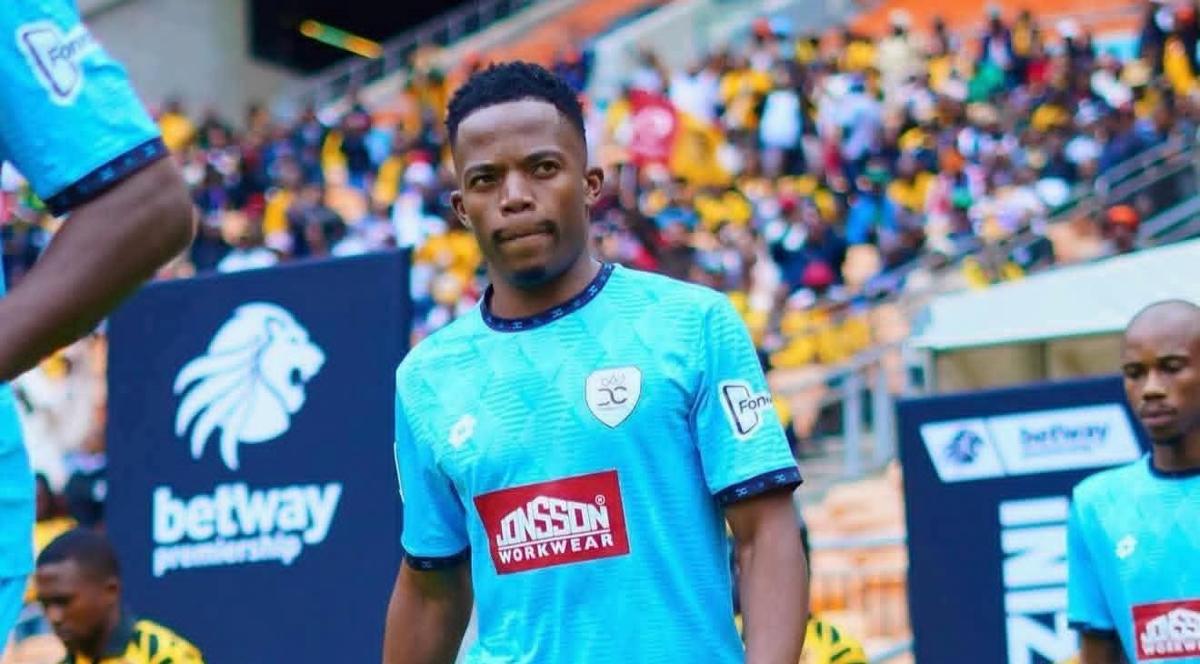
For South Africa, qualification represents another significant milestone. Bafana Bafana reached the knockout stages after producing disciplined displays, including a memorable victory over South Korea, rekindling memories of the country’s steady rise in international football.
Cape Verde and DR Congo have also emerged as two of the tournament’s surprise packages, proving that determination, tactical organisation and teamwork can often outweigh reputation.
Africa’s remarkable journey at the World Cup has been built on decades of gradual progress.
Cameroon became the first African nation to reach the quarter-finals at Italia ’90, inspiring an entire generation across the continent. Senegal repeated the feat in 2002, before Ghana came within a penalty kick of becoming the first African semi-finalists in South Africa in 2010.
History was rewritten by Morocco in Qatar four years ago when the North Africans became the first team from the continent to reach the World Cup semi-finals, defeating football heavyweights Spain and Portugal along the way.
Those achievements have steadily dismantled the long-held perception that African teams merely participate at World Cups. They now compete to challenge for the biggest honours.
Attention now shifts to Southern Africa as Bafana Bafana prepare for a historic Round of 32 clash against Canada.
The encounter will be the first World Cup knockout match for both nations, setting the stage for what promises to be a fiercely contested battle.
Canada arrive with attacking stars Jonathan David and captain Alphonso Davies, both seasoned performers in Europe’s elite leagues, and are widely regarded as favourites on paper.
However, South Africa have built their campaign on defensive discipline, a relentless work rate and devastating counter-attacks, qualities that have already unsettled higher-ranked opponents during the group stages.
Football, however, has repeatedly shown that knockout matches are rarely won on reputation alone.
Despite Argentina, Brazil, France, England, Spain and Germany remaining among the bookmakers’ favourites to lift the trophy, African teams have consistently demonstrated an ability to upset the established order when it matters most.
With nine nations still flying the African flag, belief is sweeping across the continent that a dream once dismissed as impossible may finally be within reach.
Whether one of Africa’s finest can go on to reach the final, or even lift football’s most coveted trophy, will be determined over the coming weeks.
But whatever unfolds from here, the 2026 FIFA World Cup has already become a defining chapter in African football history, proving that the continent is no longer merely knocking on the door of global football supremacy. It is beginning to walk through it.
Join our WhatsApp Channel
Be part of a growing community that relies on Dagmedia News for fast, accurate, and credible updates from across Zimbabwe and beyond.
We also offer: Graphic Design, Photography, Web Design, Videography, Concept Development, Idea Generation & Incubation, and Advertising Services.
©️ www.dagmedia.co.zw 2026
Click here to subscribe: Follow us on WhatsApp
















Comments (0)
Join the conversation
Sign in with Google to comment and like articles
No comments yet. Be the first to share your thoughts!