

The images have become painfully familiar. African migrants running for safety. Families abandoning homes built over decades. Shops looted. Market stalls reduced to ashes. Mothers clutching children while searching for the next border crossing. Yet amid the smoke, one question refuses to disappear.
If illegal immigration is the enemy, why do many of those hunted appear to be overwhelmingly black Africans?
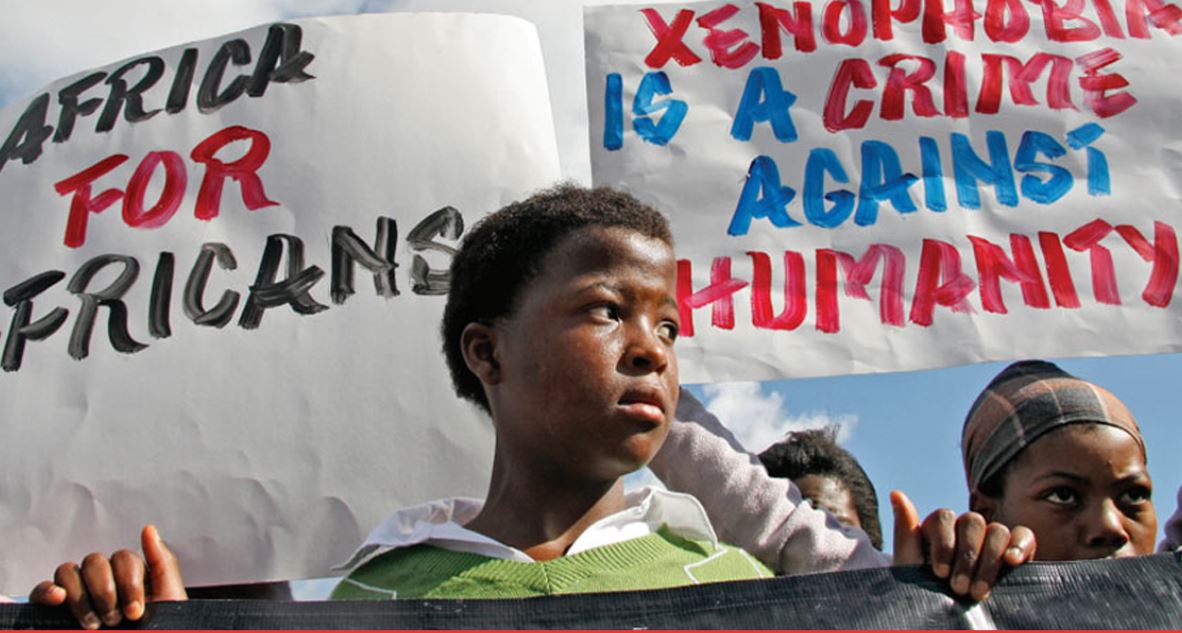
It is a question increasingly being asked across the continent as South Africa once again grapples with anti-immigrant tensions. From Zimbabweans and Mozambicans to Malawians, Nigerians, Ethiopians, Somalis and Congolese, the faces of those targeted are overwhelmingly African.
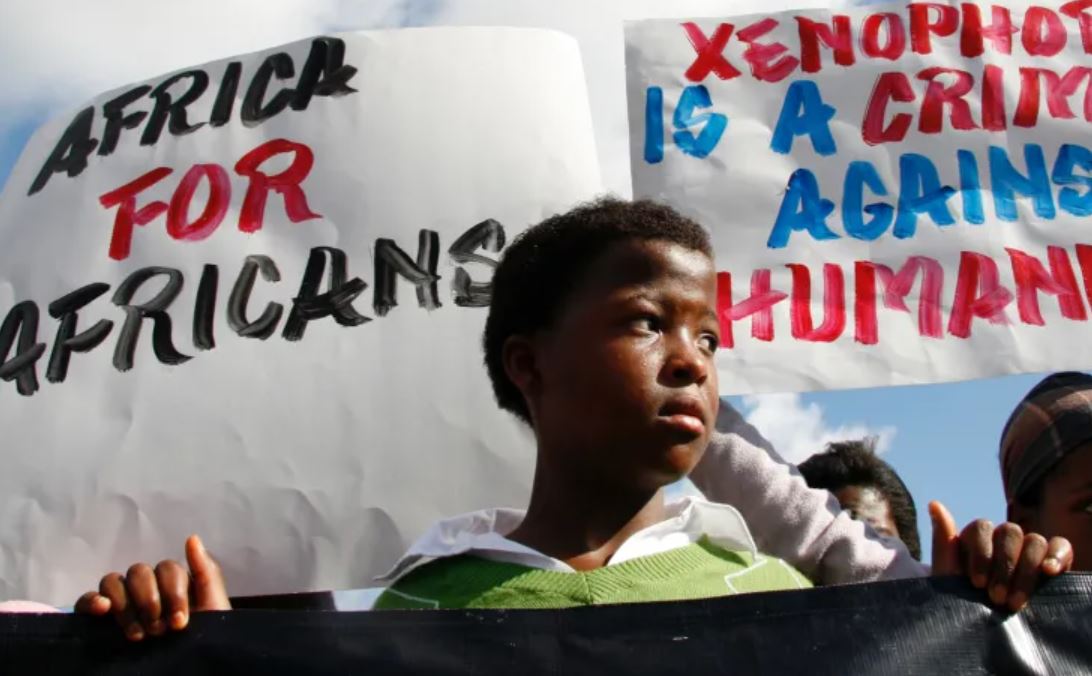
The uncomfortable debate has therefore shifted from whether South Africa is experiencing xenophobia to whether the country is confronting something more specific: Afrophobia.
Xenophobia, by definition, is hostility toward foreigners regardless of race, nationality or ethnicity. Afrophobia describes hostility directed specifically at fellow Africans.
The distinction is not merely academic. It goes to the heart of what many observers believe is happening on South African streets.
Across numerous incidents over the past two decades, mobs have attacked businesses owned by black African migrants while businesses operated by other foreign nationals have sometimes appeared to escape similar levels of attention. Videos circulating on social media during recent operations have fuelled further debate, with critics questioning whether enforcement efforts are applied consistently across all foreign communities. Those claims remain contested, and authorities maintain that immigration enforcement is based on legal status rather than race or nationality.
If immigration laws are to be enforced, legal experts say they should be enforced uniformly. An undocumented person remains undocumented irrespective of whether they are black, white, Asian or European.
That is where the debate becomes increasingly uncomfortable.
South Africa is home to migrants from every continent. British citizens, Germans, Portuguese, Greeks, Americans, Chinese nationals, Pakistanis, Indians, Bangladeshis and many others live and work across the country. While some hold valid permits and contribute significantly to the economy, critics argue that public anger and vigilante actions disproportionately focus on black African migrants, raising difficult questions about perception, policing and prejudice.
Immigration specialists caution against sweeping conclusions. They note that reliable data on the legal status of all foreign residents is limited, making it difficult to substantiate broad claims that undocumented white migrants are ignored. However, they also acknowledge that public narratives and mob violence often appear to single out African nationals.
This contradiction has become one of Africa’s greatest political ironies.
South Africa owes much of its liberation history to the solidarity extended by neighbouring African countries. During apartheid, thousands of South African freedom fighters found refuge in Zimbabwe, Zambia, Mozambique, Tanzania, Angola, Botswana and elsewhere. These countries opened refugee camps, trained liberation fighters and sacrificed economic opportunities to isolate the apartheid regime.
Many African governments endured military raids and economic retaliation because they refused to abandon the struggle for a democratic South Africa.
Today, many Africans ask whether that solidarity is being repaid.
Political rhetoric has added fuel to an already volatile situation. Statements blaming foreigners for unemployment, crime, pressure on public services and housing shortages have resonated with sections of the population struggling under difficult economic conditions.
Economists, however, argue that unemployment, inequality, corruption, weak economic growth and governance failures cannot be explained solely by migration. They warn that migrants often become convenient scapegoats for structural problems with far deeper roots.
For many African migrants, the consequences are devastating.
Businesses built over years disappear overnight. Children withdraw from school. Families flee with nothing but the clothes they are wearing. Some never recover financially or emotionally.
Human rights organisations have repeatedly condemned attacks on migrants, arguing that criminal behaviour should be dealt with individually rather than by targeting entire nationalities.
There is another irony that troubles many observers.
South Africa proudly champions human rights in international forums and frequently calls for African unity through the African Union and regional bodies. Yet periodic attacks on fellow Africans appear to undermine the very ideals of Pan-Africanism that leaders often celebrate.
Can a continent genuinely speak of continental integration while ordinary Africans fear crossing borders within Africa?
The question becomes even more significant as the African Continental Free Trade Area seeks to encourage greater movement of goods, investment and, eventually, people across the continent.
Fear has never built regional integration. Selective hostility never strengthens African unity.
If immigration enforcement becomes associated primarily with the colour of one’s skin or the country from which one comes, perceptions of discrimination become almost impossible to dispel.
South African authorities insist that immigration operations target undocumented migrants irrespective of race or nationality. They have also condemned vigilante violence and emphasised that immigration enforcement must occur within the law. Nevertheless, the persistence of public perceptions that black Africans are disproportionately targeted continues to fuel accusations of Afrophobia.
Ultimately, the debate is no longer simply about borders.
Every sovereign nation has the right to regulate immigration and enforce its laws. No country is obliged to tolerate unlawful residence. That principle is recognised under international law.
The greater challenge is ensuring that those laws are applied fairly, consistently and without racial or ethnic bias.
If an undocumented migrant from Zimbabwe is arrested while an undocumented migrant from Europe or elsewhere is ignored, the issue ceases to be one of immigration alone. It becomes a question of equal treatment before the law.
South Africa therefore faces a defining moral and political test.
It must demonstrate that immigration enforcement is genuinely impartial, transparent and rooted in the rule of law rather than public prejudice. Failure to do so risks deepening the perception across the continent that the violence is not merely xenophobia, but hostility directed specifically at Africans.
For a nation whose freedom was nurtured by African solidarity, that is a legacy few would wish to inherit
Join our WhatsApp Channel
Be part of a growing community that relies on Dagmedia News for fast, accurate, and credible updates from across Zimbabwe and beyond.
We also offer: Graphic Design, Photography, Web Design, Videography, Concept Development, Idea Generation & Incubation, and Advertising Services.
©️ www.dagmedia.co.zw 2026
Click here to subscribe: Follow us on WhatsApp












Comments (0)
Join the conversation
Sign in with Google to comment and like articles
No comments yet. Be the first to share your thoughts!