

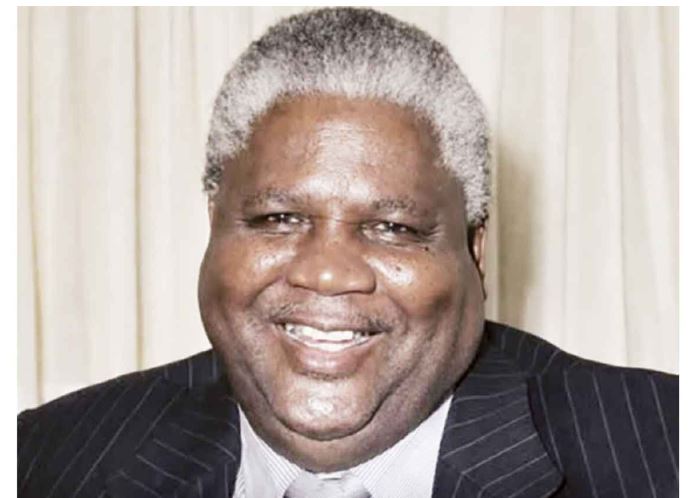
There are names that merely occupy the pages of history, and there are names that become the heartbeat of a nation. Long after monuments weather and generations change, their stories continue to inspire, challenge and unite. Such is the story of the late Dr Joshua Mqabuko Nyongolo Nkomo, a liberation icon whose towering contribution to Zimbabwe’s independence and nation-building continues to command admiration nearly three decades after his death.
To countless Zimbabweans, he remains affectionately remembered as “Father Zimbabwe”, a tribute born from decades of sacrifice, resilience and an unwavering commitment to the liberation of his people. His was a life defined not by personal comfort or political convenience, but by the conviction that every Zimbabwean deserved dignity, equality and the right to determine their own destiny.
As Zimbabwe commemorates the anniversary of his death on July 1, the nation pauses to remember not only a nationalist leader, but a statesman whose vision transcended the struggle for political independence. His life remains a compelling reminder that true leadership is measured by sacrifice, humility and an enduring commitment to national unity.
Born on June 19, 1917, in Semokwe, Matabeleland, Joshua Nkomo grew up under a colonial system that denied the African majority political representation, economic opportunities and social justice. From an early age, he witnessed inequalities that shaped his worldview and inspired his lifelong commitment to challenging injustice.
His education, combined with his experiences as a trade union organiser, exposed him to the hardships endured by ordinary Zimbabweans. Travelling across the country, he met miners, railway workers, farm labourers and factory employees whose daily struggles convinced him that political freedom and economic emancipation were inseparable.
As nationalist consciousness spread across Africa during the 1950s, Nkomo emerged as one of Southern Rhodesia’s most influential African leaders. Calm in temperament yet resolute in conviction, he became a rallying point for thousands yearning for majority rule. His speeches carried a message of hope, courage and collective responsibility, urging Zimbabweans to believe that colonial domination was neither permanent nor invincible.
The colonial administration viewed such mobilisation as a threat. Nkomo endured repeated arrests, restrictions and lengthy periods of detention. Yet incarceration failed to extinguish his determination. Instead, it strengthened his resolve and elevated his standing among those who regarded him as a symbol of resistance against colonial oppression.
The liberation struggle that followed demanded immense sacrifice. Countless sons and daughters of Zimbabwe left their homes to join the armed struggle, while many others supported the cause from villages, towns and refugee camps. Families were separated, lives were lost and communities bore the scars of war.
Nkomo stood among the generation of nationalist leaders whose political leadership complemented the sacrifices made by thousands of liberation fighters. Although the nationalist movement experienced ideological and organisational divisions, historians widely acknowledge that the collective efforts of liberation movements, political leaders and ordinary citizens ultimately paved the way for Zimbabwe’s independence in April 1980.
Independence was not merely the lowering of one flag and the raising of another. It represented the fulfilment of decades of sacrifice by countless Zimbabweans who had dreamed of governing themselves. For Nkomo, however, independence marked not the end of the journey but the beginning of an even greater responsibility: building a united nation from the ashes of conflict.
The years that followed independence tested that vision. Political tensions threatened national cohesion, while mistrust and violence cast shadows over the hopes of a newly liberated people. Once again, Nkomo confronted one of the greatest challenges of his public life.
Rather than embrace perpetual confrontation, he increasingly advocated dialogue and reconciliation. His role in the signing of the 1987 Unity Accord remains one of the defining moments of Zimbabwe’s post-independence history. The agreement sought to end years of political conflict and establish a foundation upon which Zimbabweans could pursue peace together.
For many citizens, that decision reflected extraordinary statesmanship. It demonstrated a willingness to place national stability above political rivalry and personal ambition.
Throughout his public life, Nkomo consistently reminded Zimbabweans that lasting development could never flourish where hatred, tribalism or regional divisions prevailed. Instead, he envisioned a Zimbabwe where diversity became a source of strength rather than division.
He often urged citizens to judge one another not by language, ethnicity or region, but by their shared commitment to nation-building.
That philosophy earned him admiration beyond Zimbabwe’s borders. Across southern Africa, he was respected as one of the elder statesmen of the liberation era, a leader whose wisdom extended beyond politics to questions of peace, reconciliation and regional solidarity.
Those who worked closely with him frequently described a remarkably humble individual. Despite occupying the highest levels of political leadership, he remained approachable and attentive to ordinary people. Villagers, workers and community leaders often recalled his willingness to listen patiently before offering guidance.
Former colleagues have spoken of a leader who believed persuasion was stronger than intimidation and that dialogue offered more lasting solutions than force.
Education also occupied a central place in his vision for Zimbabwe. Nkomo regarded knowledge as one of the most powerful instruments for overcoming poverty, inequality and underdevelopment. He encouraged young Zimbabweans to pursue education not simply for personal advancement but for national transformation.
He believed that every educated citizen carried a responsibility to contribute towards building stronger institutions, healthier communities and a more prosperous economy.
His advocacy extended to rural development, infrastructure and expanding opportunities for communities historically excluded from economic progress. Although Zimbabwe continues to confront developmental challenges, many of the aspirations Nkomo articulated remain central to contemporary national discourse.
Today, his legacy lives on in educational institutions, roads, public buildings and national memorials that bear his name. More importantly, it survives in the collective memory of Zimbabweans who continue to draw inspiration from his life’s work.
For younger generations born after independence, Nkomo’s story serves as an introduction to the sacrifices upon which modern Zimbabwe was built. The freedoms they inherit today were secured through the courage of countless individuals who refused to surrender hope despite enormous adversity.
Political scientists often argue that Nkomo’s greatest legacy lies not only in his contribution to liberation but in his enduring commitment to national reconciliation. At moments when Zimbabwe risked deeper division, he repeatedly called for dialogue, tolerance and mutual understanding.
Those ideals remain profoundly relevant in an era where many societies across the world continue to grapple with political polarisation, social fragmentation and economic uncertainty.
His life also reminds Zimbabweans that patriotism demands more than celebrating national symbols. It requires citizens to participate actively in building communities founded upon justice, accountability and mutual respect.
Every Independence Day celebration, every Heroes Day commemoration and every national reflection upon Zimbabwe’s liberation inevitably recalls the sacrifices made by pioneers such as Joshua Nkomo and countless others whose collective efforts transformed the course of history.
Yet perhaps the greatest tribute to his memory lies not in speeches or monuments but in the daily choices Zimbabweans make to strengthen peace, reject violence and embrace unity.
History rarely remembers leaders solely for the offices they held. Instead, it remembers those whose values continue to illuminate the path forward for future generations. Joshua Nkomo belongs to that enduring tradition.
Nearly three decades after his death on July 1, 1999, his name continues to evoke memories of courage, resilience, sacrifice and reconciliation. His journey from trade union organiser to nationalist leader, from political prisoner to respected statesman, reflects the aspirations of millions who longed for freedom and dignity.
As Zimbabwe honours his memory, citizens are reminded that independence was never an end in itself but the beginning of a continuous national project requiring wisdom, unity and shared purpose. The nation he helped shape continues to evolve, confronting new opportunities and new challenges. Yet the principles that guided his public life — service, inclusivity, dialogue and patriotism — remain as relevant today as they were during the liberation struggle.
The measure of Dr Joshua Mqabuko Nyongolo Nkomo’s legacy cannot be confined to history books or anniversaries. It is found in every Zimbabwean who believes that the country’s future is strongest when its people stand together despite their differences.
For many who affectionately remember him as “Father Zimbabwe,” his greatest monument is not carved from granite or cast in bronze. It is the enduring hope that Zimbabwe will continue striving toward the ideals of unity, peace and shared prosperity that inspired his life’s work. In that hope, his voice continues to echo across generations, reminding the nation that the true strength of Zimbabwe has always rested in the resilience and unity of its people.
Join our WhatsApp Channel
Be part of a growing community that relies on Dagmedia News for fast, accurate, and credible updates from across Zimbabwe and beyond.
We also offer: Graphic Design, Photography, Web Design, Videography, Concept Development, Idea Generation & Incubation, and Advertising Services.
©️ www.dagmedia.co.zw 2026
Click here to subscribe: Follow us on WhatsApp












Comments (0)
Join the conversation
Sign in with Google to comment and like articles
No comments yet. Be the first to share your thoughts!