

History has an unsettling habit of changing its language while repeating its warning.
In 1983, economic hardship in Nigeria gave birth to one of Africa’s most infamous slogans: “Ghana Must Go.” More than a phrase, it became government policy. Millions of West African migrants, including large numbers of Ghanaians, were forced to abandon homes, businesses and livelihoods. The distinctive chequered bags they carried into exile became enduring symbols of displacement and shattered dreams.
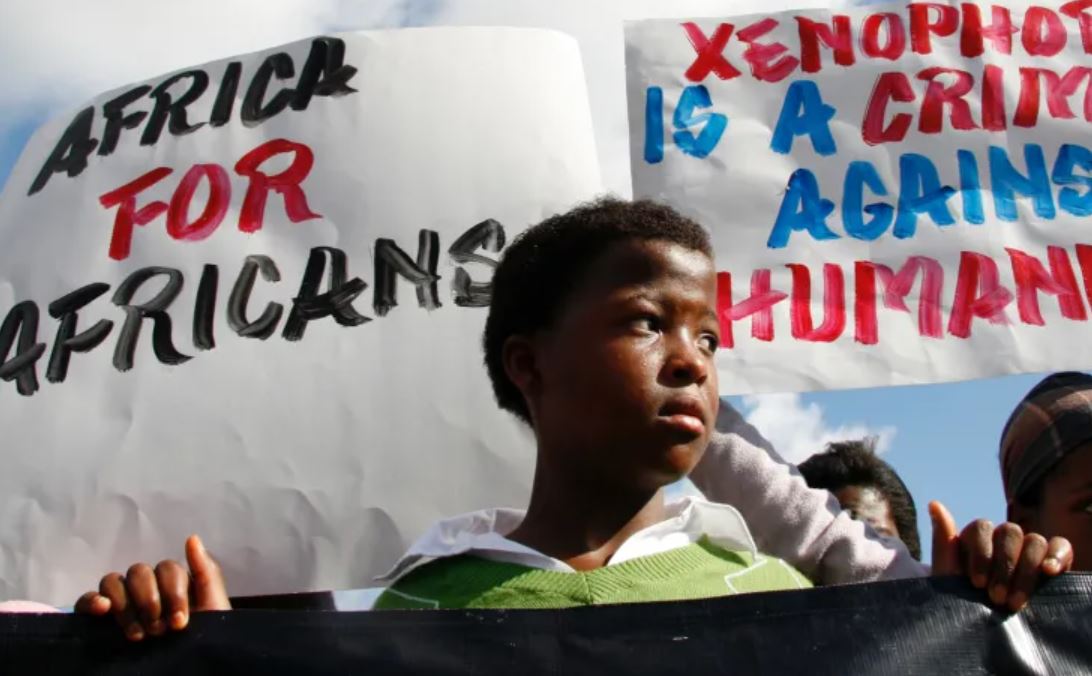
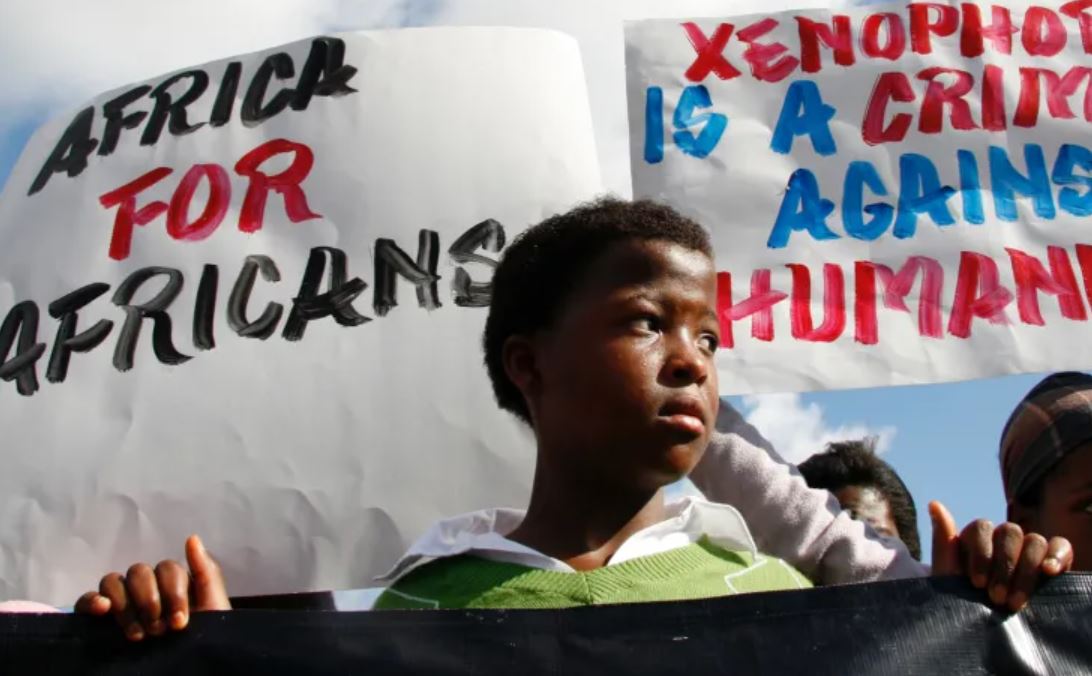
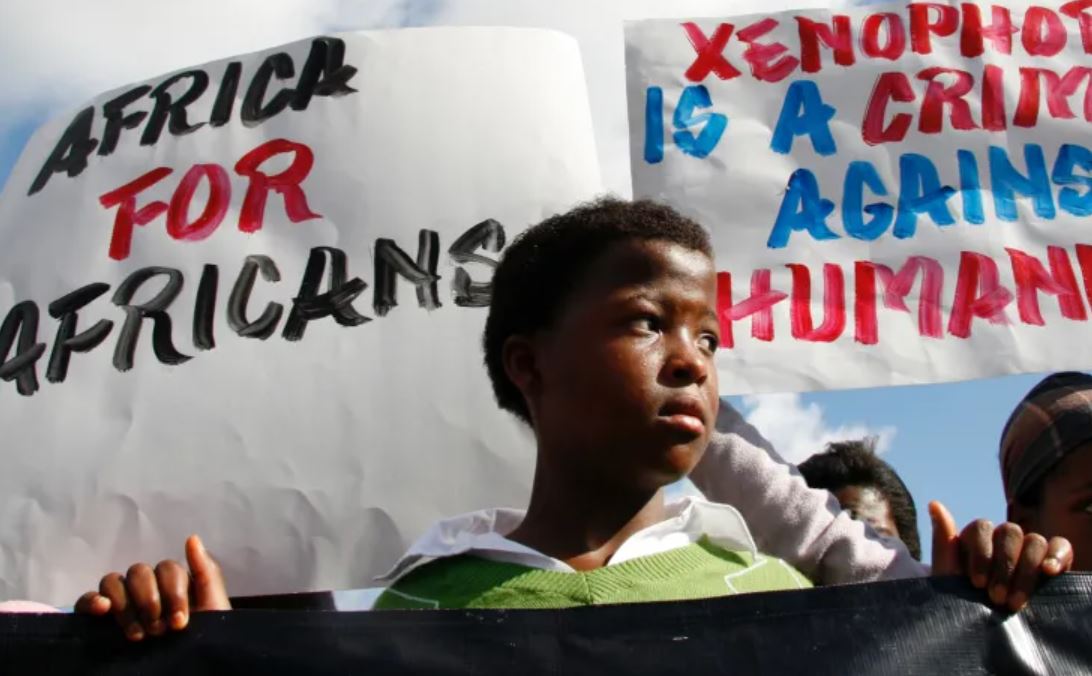
Four decades later, another phrase echoes across parts of South Africa: “Mabahambe” — “they must go.” It is heard at protests, in anti-immigration demonstrations, and in communities where some foreign nationals have become targets of intimidation, violence and looting.
Although the historical contexts differ, and South Africa has not adopted a state policy equivalent to Nigeria’s 1983 expulsions, the language carries a familiar undertone. It identifies the foreigner as the problem, and removal as the solution.
Alongside that slogan has emerged Operation Dudula. The movement says it seeks stricter enforcement of immigration laws, but its activities have drawn widespread criticism from human rights organisations, religious leaders and civil society groups. Critics allege its campaigns have fuelled hostility toward migrants and have at times coincided with violence and intimidation.
A recurring pattern
The similarities are not in identical events, but in a recurring pattern. Whenever economies falter, unemployment rises and inequality deepens, the easiest political message is often to blame those with the least power.
The migrant becomes a convenient scapegoat, while corruption, poor governance, failing public services and slow economic growth escape the same level of public anger.
History shows that Nigeria’s “Ghana Must Go” did not rescue its economy. Inflation persisted. Unemployment remained high. Structural challenges continued. What endured longest was the human cost and the diplomatic scars left across West Africa.
The lesson was painful but clear: nations cannot deport their way to prosperity.
A warning for today
That lesson deserves reflection in South Africa now. If the cry of “Ghana Must Go” failed to solve yesterday’s economic crisis, can the cry of “Mabahambe” solve today’s? If forcing migrants from neighborhoods could create jobs, reduce inequality and restore growth, history would have already proved it. Instead, history points in the opposite direction.
The greater danger lies not only in violence itself, but in the normalisation of language that portrays entire communities as enemies. Once slogans replace reason, suspicion replaces neighbourliness, and fear replaces ubuntu, societies begin to lose something more valuable than economic opportunity. They begin to lose their humanity.
Africa has travelled this road before. It knows where it leads. The continent that united to defeat colonialism and apartheid cannot afford to become one where Africans are taught to fear fellow Africans simply because they crossed borders drawn by colonial powers.
That is why “Mabahambe” should not only remind Africa of “Ghana Must Go.” It should remind the continent of the consequences of allowing anger to triumph over history, politics to triumph over humanity, and slogans to triumph over truth.
Join our WhatsApp Channel
Be part of a growing community that relies on Dagmedia News for fast, accurate, and credible updates from across Zimbabwe and beyond.
We also offer: Graphic Design, Photography, Web Design, Videography, Concept Development, Idea Generation & Incubation, and Advertising Services.
©️ www.dagmedia.co.zw 2026
Click here to subscribe: Follow us on WhatsApp




















Comments (0)
Join the conversation
Sign in with Google to comment and like articles
No comments yet. Be the first to share your thoughts!