

As homes are looted, businesses destroyed and lives uprooted, unsettling questions demand answers. What becomes of a nation when a person's home is no longer a sanctuary but a battlefield? What remains of the African dream when bricks laid over decades with sweat, sacrifice and perseverance are reduced to ashes in an afternoon because their owner speaks with a different accent?
These are not merely questions about crime. They are questions about civilisation itself.
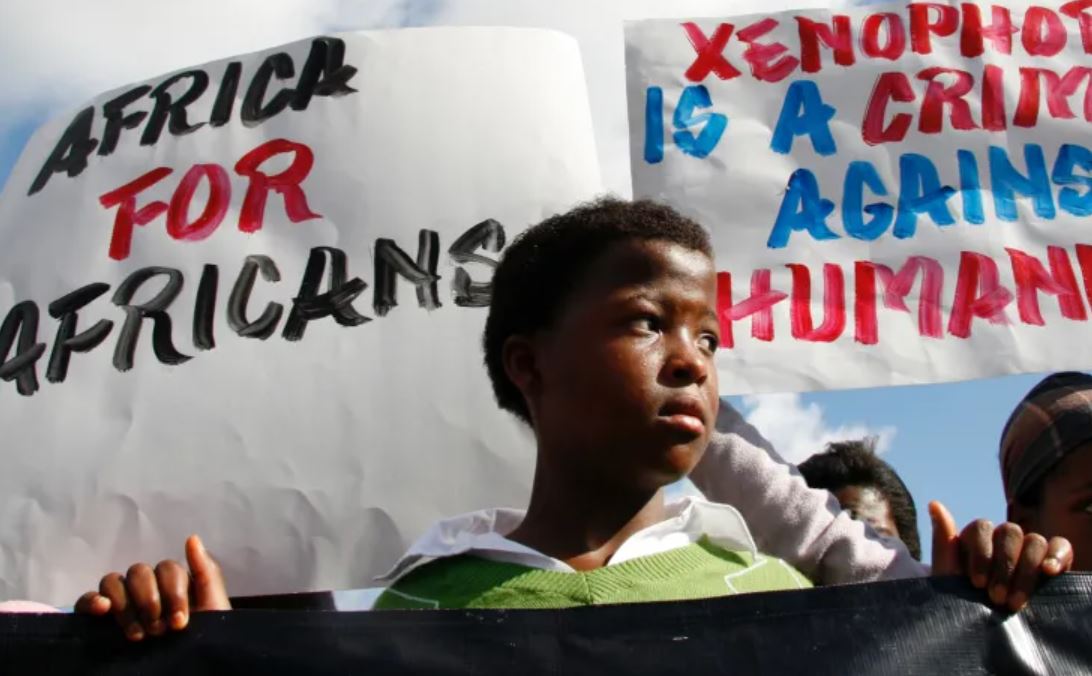
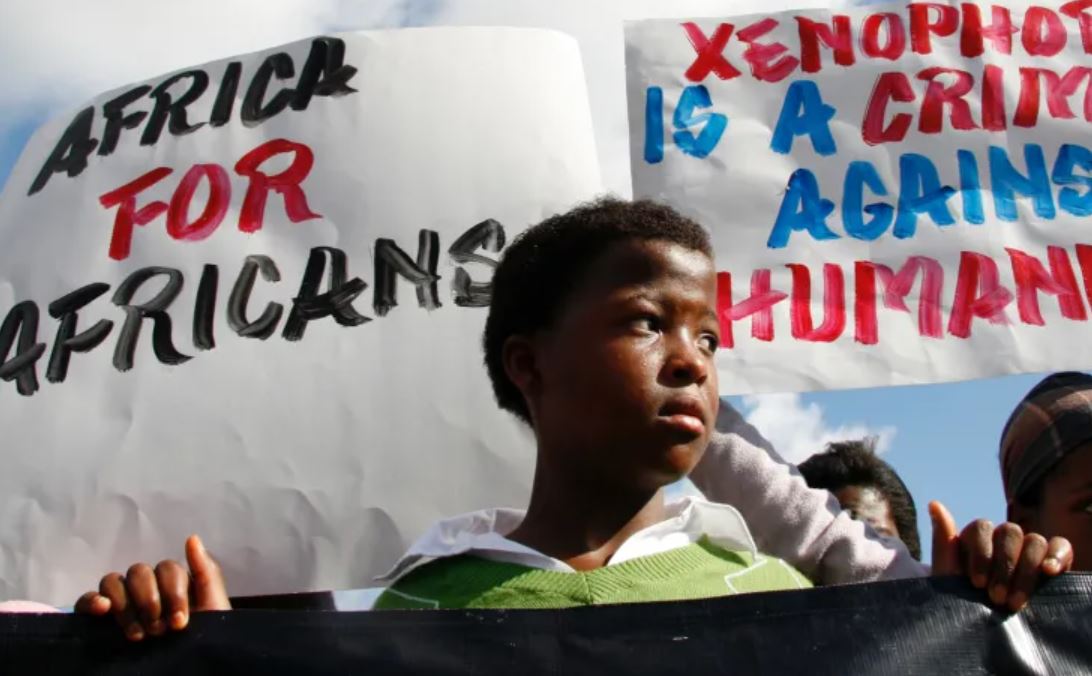
Across parts of South Africa, thousands of African migrants are once again living in fear. Doors that once opened to customers now remain shut. Shops built painstakingly over decades have been emptied. Homes have been invaded. Families have fled with little more than the clothes on their backs. Children who have known no other country are asking whether they belong anywhere at all.
Their greatest loss cannot be counted in rands.
It is counted in dignity. For every shop looted lies another story buried beneath broken shelves. For every building burnt lie years of borrowed money, sleepless nights, family sacrifice and dreams assembled one brick at a time.
Who compensates for that? Who measures the value of dignity stolen? Who restores years that can never be recovered?
CONSTITUTIONAL PROMISES TESTED
South Africa presents itself as a constitutional guardian of human rights. It has one of the world's most progressive constitutions. Its courts have repeatedly defended equality before the law. It has stood before the International Court of Justice to argue that the sanctity of civilian life should never be violated, regardless of nationality.
Yet another question refuses to disappear:
How does a nation defend human dignity abroad while struggling to guarantee it at home?
How does a country invoke international law for victims in distant conflicts while African neighbours within its own borders sleep in churches, police stations and temporary shelters after being driven from homes they legally occupied?
THE CONTRADICTIONS
More troubling questions follow.
If unemployment is the issue, why are unemployed South Africans not attacking every employer?
If crime is the issue, why are suspects identified by nationality before individual guilt is established?
If illegal immigration is the concern, why are legal immigrants also fleeing?
If undocumented migration is the problem, why are refugees, asylum seekers, permanent residents, naturalised citizens, and even South Africans mistaken for foreigners finding themselves under attack?
If economic frustration is genuine, why are supermarket shelves untouched while small township businesses owned by fellow Africans become easy targets?
The contradictions are difficult to ignore.
A GEOGRAPHICAL PATTERN
Perhaps the most uncomfortable question concerns geography.
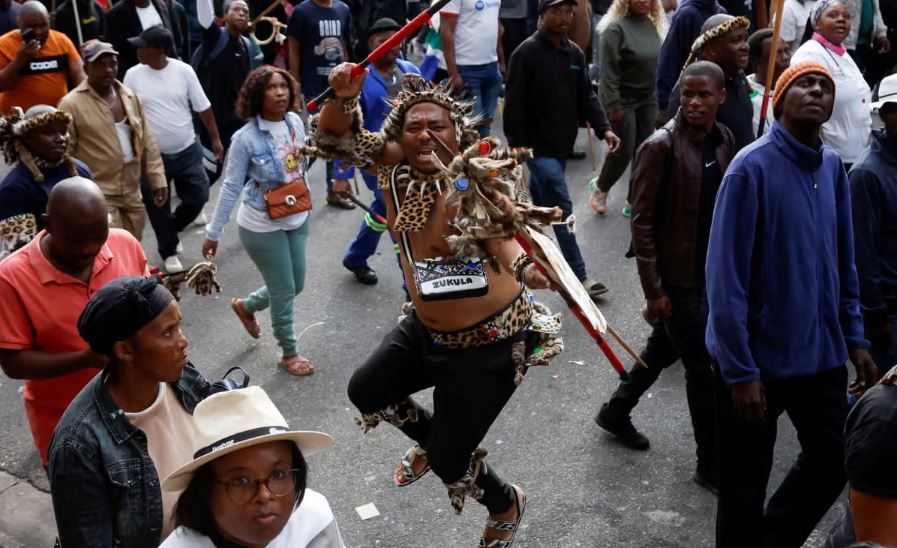
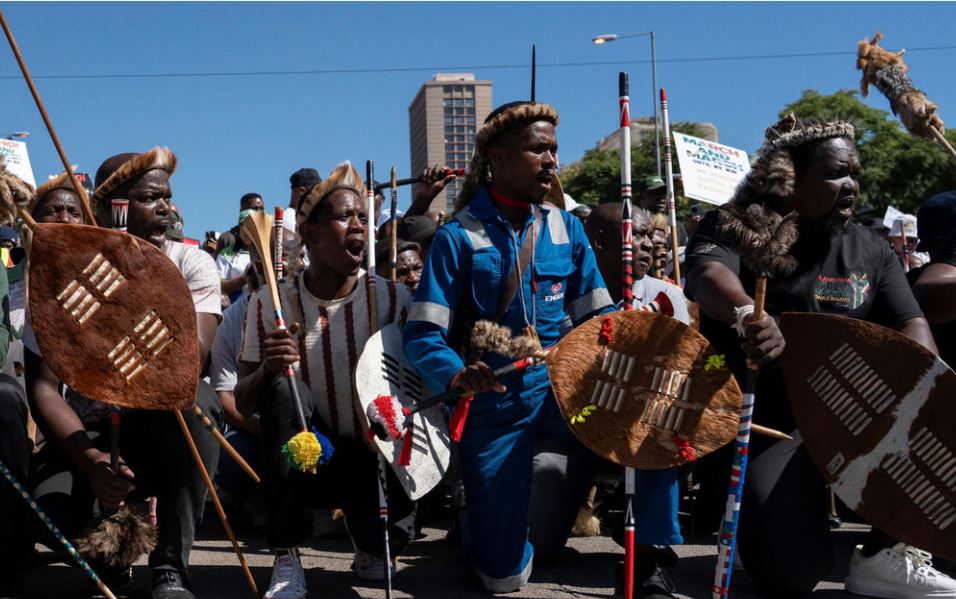
Why do such attacks appear repeatedly concentrated in parts of KwaZulu-Natal and certain urban centres, while many other communities across South Africa coexist with foreigners daily?
South Africa is home to dozens of ethnic communities with distinct histories and cultures. Why do some areas remain relatively peaceful while others repeatedly descend into violence?
Why do many communities in Limpopo, including large areas inhabited by Vhavenda, continue trading, living and interacting with Zimbabweans, Mozambicans and other Africans with comparatively fewer organised campaigns of violent displacement?
Why do many rural farming communities depend on cross-border labour without experiencing the same recurring waves of organised attacks?
What accounts for these differences? Is it local leadership, political mobilisation, economic competition, historical grievances, community policing, or something more complicated than the slogans shouted in angry streets?
These questions deserve evidence, not assumptions. Reducing the explanation to any single ethnic group overlooks the diversity of views among millions of South Africans, including countless Zulu citizens who have publicly condemned xenophobic violence, protected foreign neighbours and called for peace.
Yet the regional pattern itself raises legitimate questions that policymakers, scholars and community leaders cannot ignore: why do similar economic hardships produce coexistence in some communities but violent mobilisation in others?
INVESTMENT AND IDENTITY ERASED
The property left behind tells another painful story.
Some of those displaced did not arrive yesterday. They came 30 years ago. Some built supermarkets. Some established transport companies. Some opened factories. Some invested in construction firms. Others employed South Africans. Many paid taxes longer than some of those now demanding they leave.
Many raised children who speak isiZulu, Sesotho, isiXhosa or Tshivenda more fluently than the languages of their parents' countries of birth.
What nationality belongs to those children? What home do they return to?
When mobs say "go home," which home do they mean?
Can someone born in Johannesburg be called foreign because their parents were born elsewhere?
Can identity simply be erased by public anger?
WHO BENEFITS?
Another silence persists: ownership.
Once a business is looted, who inherits it?
Once a foreign-owned shop disappears, who occupies that market?
When houses are abandoned, who eventually controls those properties?
Who benefits economically from displacement?
Is the violence purely spontaneous, or does someone profit quietly while political slogans fill the air?
History offers uncomfortable lessons. Across the world, violence against minorities has often begun with language that dehumanises them. First they become outsiders, then competitors, then criminals. Eventually their suffering no longer provokes sympathy.
Africa knows this pattern. The continent has lived through ethnic cleansing, civil wars and genocides fuelled by narratives that first stripped fellow Africans of their humanity.
Ubuntu teaches something different. It teaches that a person's humanity is affirmed through the humanity of others.
If ubuntu remains South Africa's moral compass, then another question follows: can ubuntu survive if an African child watches another African child fleeing flames because of nationality? Can Pan-Africanism survive when passports become grounds for persecution?
CONTINENTAL IMPLICATIONS
The African Union speaks repeatedly of integration, free movement, regional trade and continental unity. The African Continental Free Trade Area promises deeper economic cooperation.
But what confidence can investors from neighbouring countries have if property accumulated over decades can disappear overnight under the protection of fear?
Investment depends on certainty. Human dignity depends on security. Continental unity depends on trust. Without these, integration risks becoming speeches delivered at international conferences.
South Africa has not forgotten its own history. Many African countries opened their borders during apartheid. Zimbabwe, Zambia, Tanzania, Angola and Mozambique sheltered exiles, hosted liberation fighters and shared scarce resources in pursuit of freedom. That solidarity was never calculated in economic profit. It was measured in shared humanity.
Does that history still matter? Or has memory become selective?
LAW VERSUS VIGILANTISM
No sovereign state is obliged to tolerate illegal immigration. Every country has the right to regulate its borders, enforce immigration laws and deport undocumented migrants through lawful procedures.
But constitutional democracies distinguish between law enforcement and mob justice.
If immigration laws need strengthening, Parliament exists.
If border controls require improvement, government institutions exist.
If undocumented migrants must be removed, courts and immigration authorities exist.
Where, then, does vigilantism acquire legitimacy? When did neighbourhood patrols become immigration courts? When did violence become public policy?
THE UNANSWERED QUESTIONS
Who will compensate the widow whose shop financed her children's education?
Who will repay decades of investment reduced to rubble?
Who will comfort children traumatised by watching parents assaulted?
Who will restore confidence that tomorrow's hard work will not again be destroyed because someone speaks Shona, Chichewa, Swahili, Lingala or Portuguese?
Above all, who will restore dignity?
This crisis is no longer simply about immigration. It is about humanity. It is about whether an African can still find safety among fellow Africans. It is about whether constitutional promises are stronger than street violence. It is about whether property rights belong to every person protected by the rule of law. It is about whether the sanctity of human life carries equal value regardless of nationality.
Until those questions receive convincing answers, every burnt shop, abandoned home and displaced family will stand as a silent indictment — not only of those who wield sticks and stones, but also of every institution that allows fear to triumph over justice, and every society that forgets that the first casualty of hatred is always our shared humanity.
Join our WhatsApp Channel
Be part of a growing community that relies on Dagmedia News for fast, accurate, and credible updates from across Zimbabwe and beyond.
We also offer: Graphic Design, Photography, Web Design, Videography, Concept Development, Idea Generation & Incubation, and Advertising Services.
©️ www.dagmedia.co.zw 2026
Click here to subscribe: Follow us on WhatsApp













Comments (0)
Join the conversation
Sign in with Google to comment and like articles
No comments yet. Be the first to share your thoughts!